Can massage alone regrow hair lost to alopecia areata?
No such promise can be made. Massage and everyday hair care cannot replace treatment for alopecia areata. The right approach depends on the actual cause.
Updated: 2026-10-06
Alopecia areata · Patchy hair loss
One or more sudden bald patches should be assessed by a doctor or dermatologist. The everyday term “patchy hair loss” can describe different conditions, including alopecia areata and infections, which need to be distinguished.
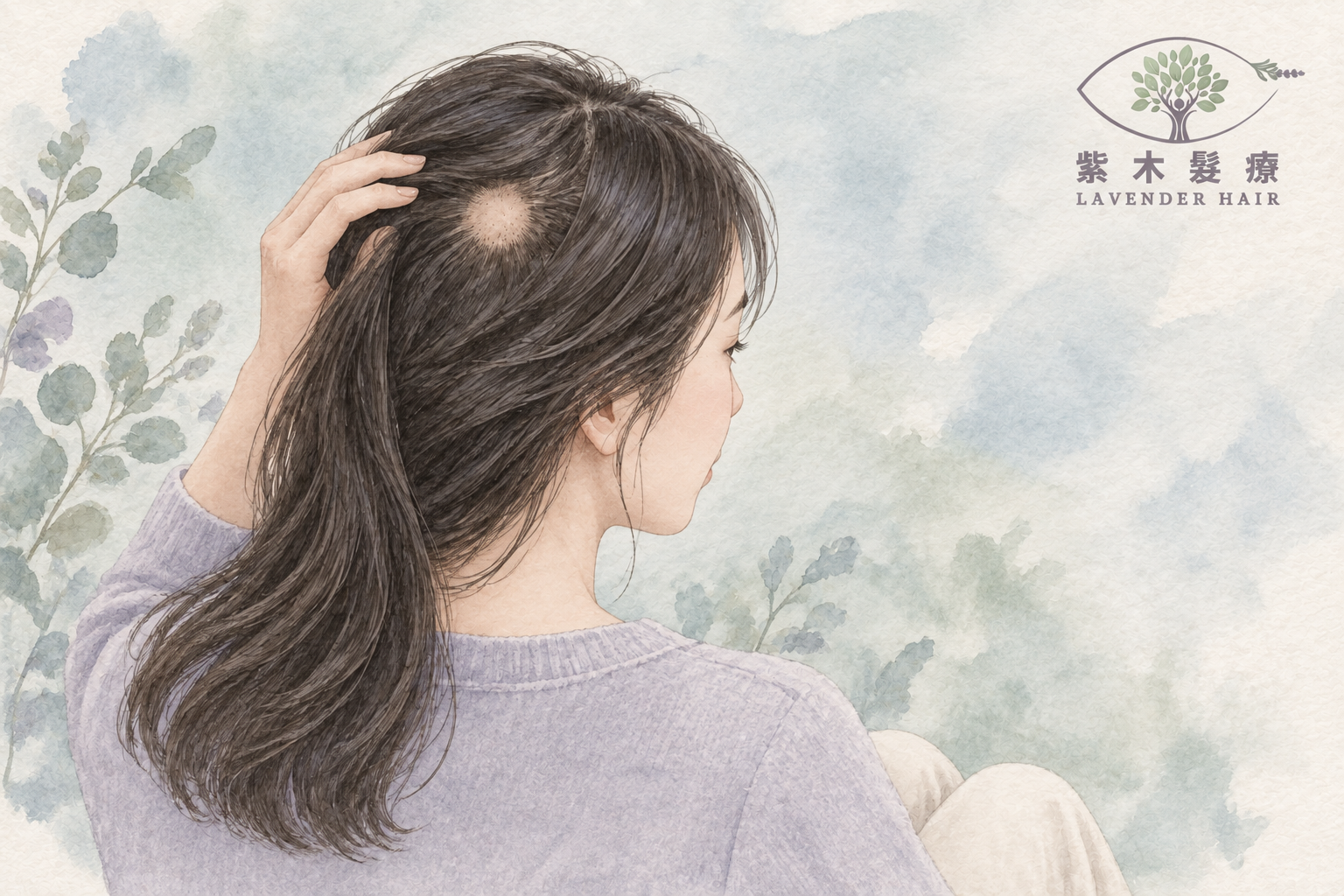
Alopecia areata is an autoimmune form of hair loss: the immune system mistakenly attacks hair follicles, causing hair loss in affected areas. This does not necessarily mean the follicles are permanently damaged. It is not caused by failing to wash your hair properly.
No. Some people develop alopecia areata after significant stress or a life event, but many cases have no clear trigger. There is no need to blame yourself for losing hair, and a busy period at work alone cannot establish the cause.
It can. Some people experience regrowth, but the timing, extent and likelihood of further hair loss vary. A steady routine and gentle hair care can support everyday comfort, but cannot guarantee recovery from alopecia areata.
You can book a free scalp check for a magnified look at your hair, scalp surface and follicle openings, and discuss changes in density and everyday comfort. Our team will explain suitable gentle care. If your needs fall outside our care services, we will not push a treatment. If you are already receiving medical treatment, bring your current instructions so everyday care can fit around them.
Prepared by Lavender Hair · Updated: 6 October 2026.
A doctor will assess changes in hair density, scalp condition and medical history. If you are receiving treatment, follow medical advice alongside gentle care. You do not need to visit us before seeking medical assessment.
Using advanced equipment at 50 to 200 times magnification, we examine the visible condition of your hair, scalp surface and follicular openings, then discuss suitable products or treatments with you.If your needs fall outside our care, we will explain honestly rather than recommend an unsuitable treatment.
Start with the essentials, then explore what they mean for your circumstances.
No such promise can be made. Massage and everyday hair care cannot replace treatment for alopecia areata. The right approach depends on the actual cause.
Images alone cannot establish a diagnosis. They help show visible scalp and hair features; medical assessment belongs with a doctor.