
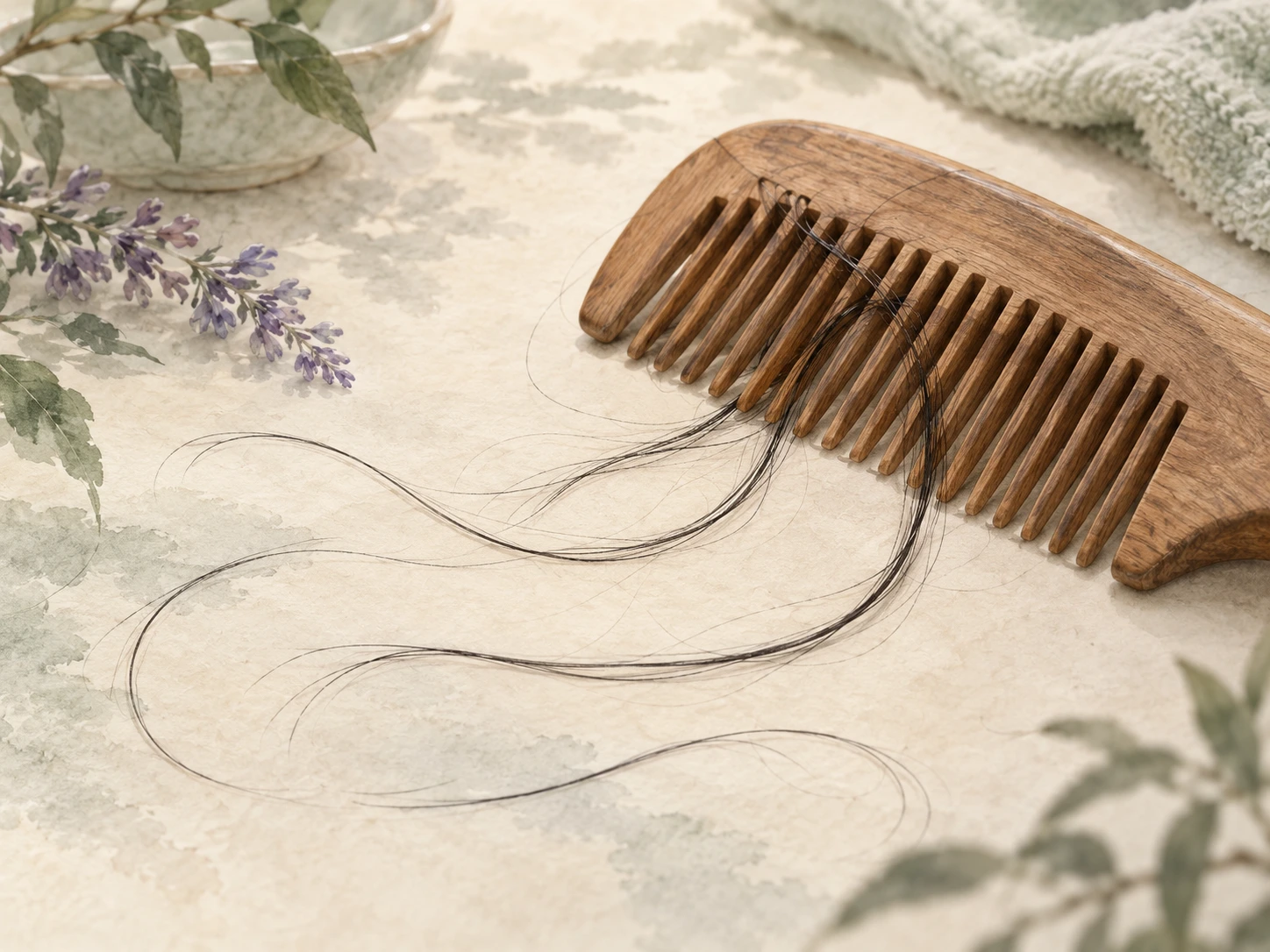
Notice Shedding
Notice how hair falls, how long it has been happening and any recent changes.
Hair loss and hair thinning
Receding temples, crown thinning, a widening part, alopecia areata and shedding linked to weight loss, telogen effluvium, stress or childbirth need different observation and care approaches. Shedding may be a temporary phase. Finding the right approach gives you a chance to make progress, step by step.
Whether you have only just noticed shedding or have been worried for some time, try not to blame yourself. Start by recording the changes, then explore scalp care, hair management and suitable support.
Notice how hair falls, how long it has been happening and any recent changes.
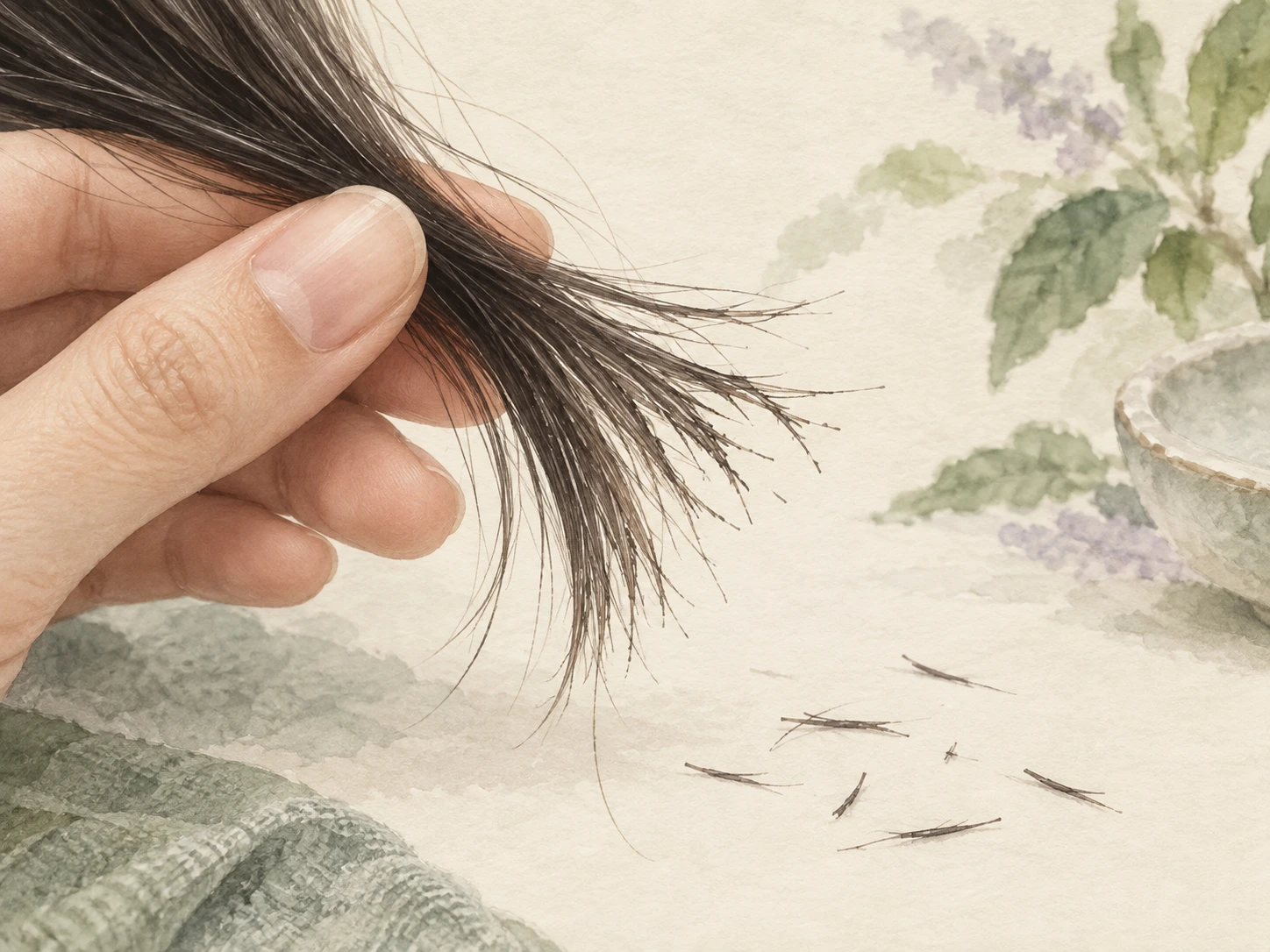
Look at strand lengths, the condition of the ends and your heat-styling, colouring or perming habits.

Track changes around the part, crown or hairline and use records to look back.
Observation records help communication. Causes of hair loss need to be considered individually.

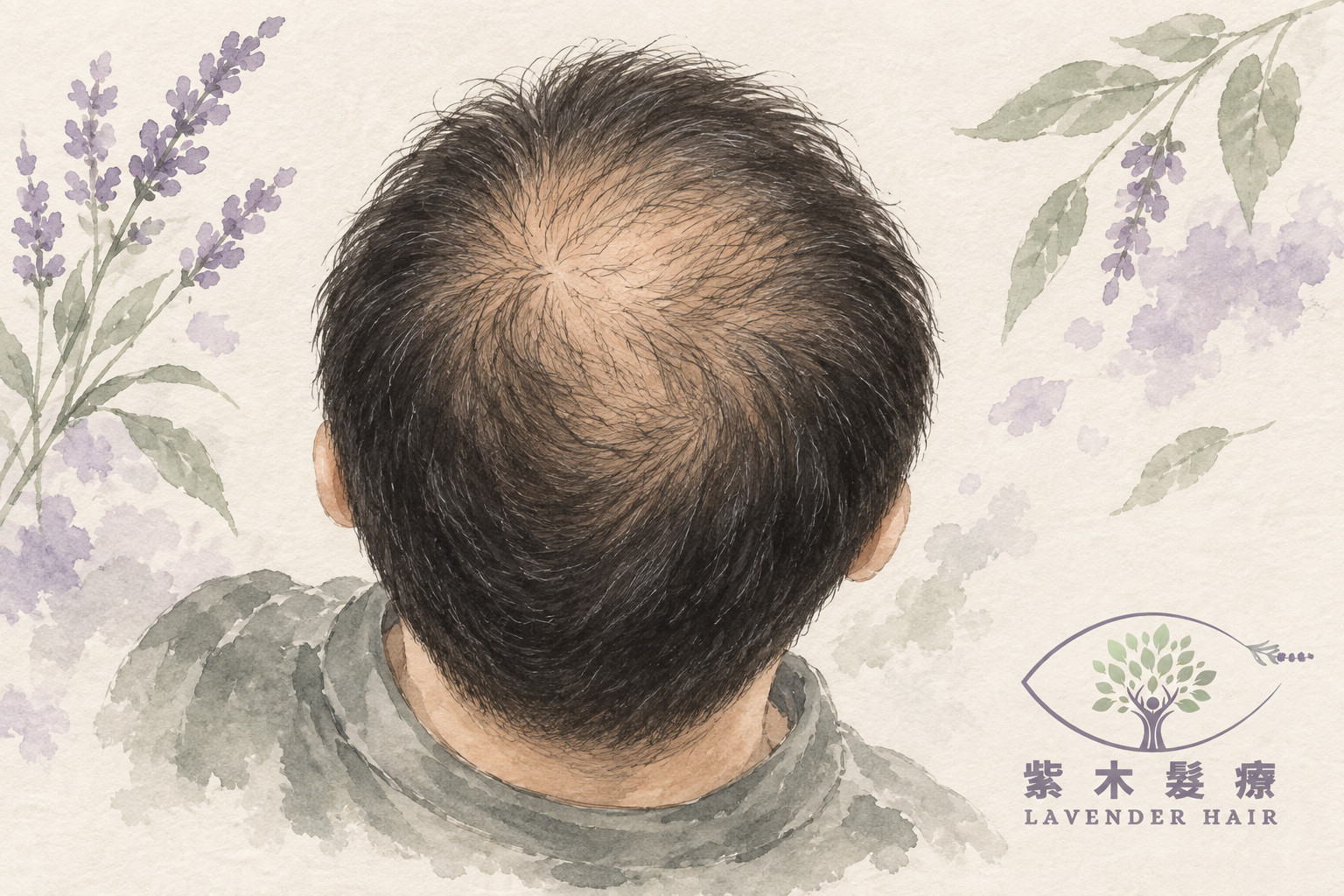

Notice whether the central part gradually widens and whether overall density changes.
Learn More →
If shedding increases after childbirth, understand the timeline and everyday care.
Learn More →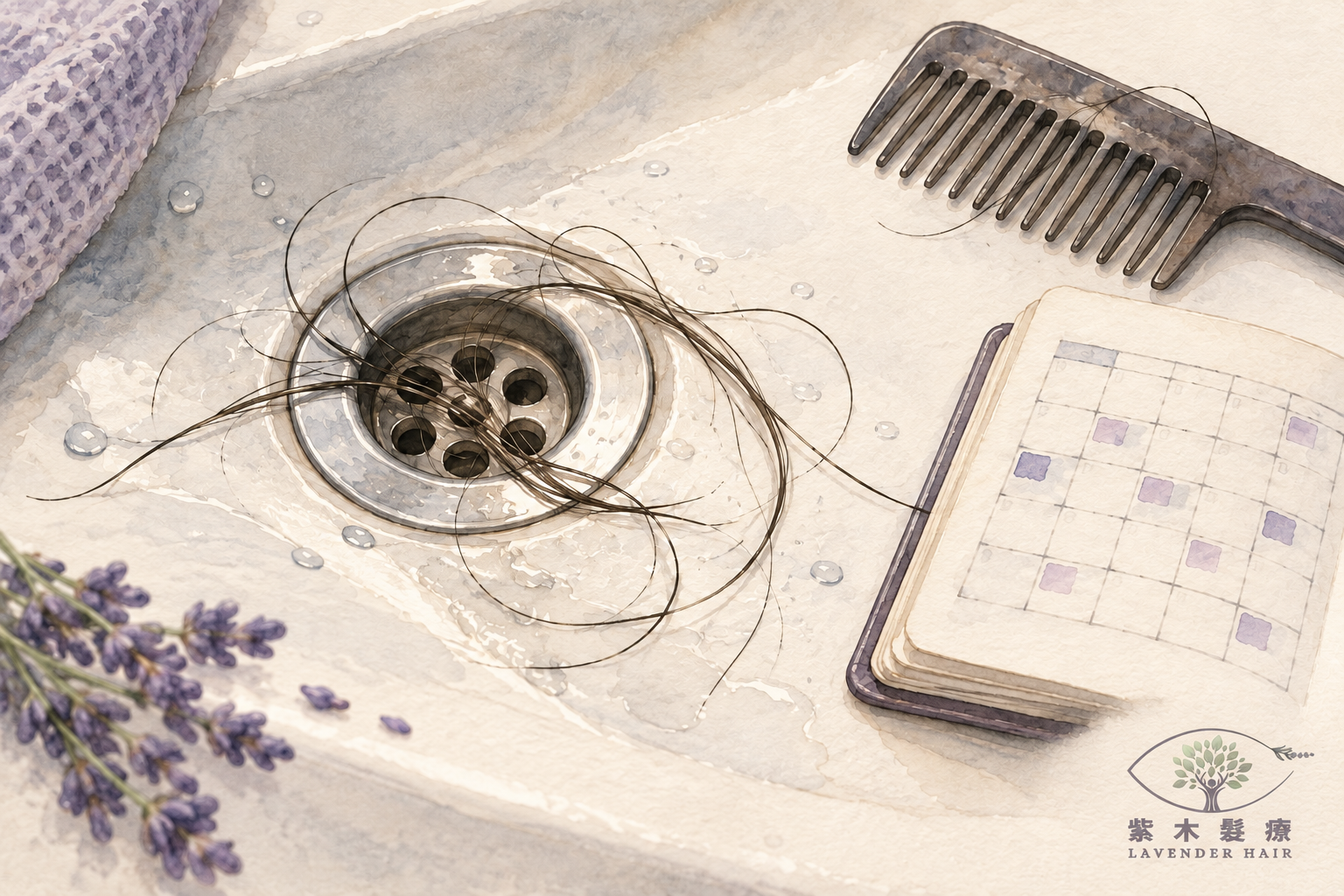
Record shedding during washing, when it began and recent changes in your health.
Learn More →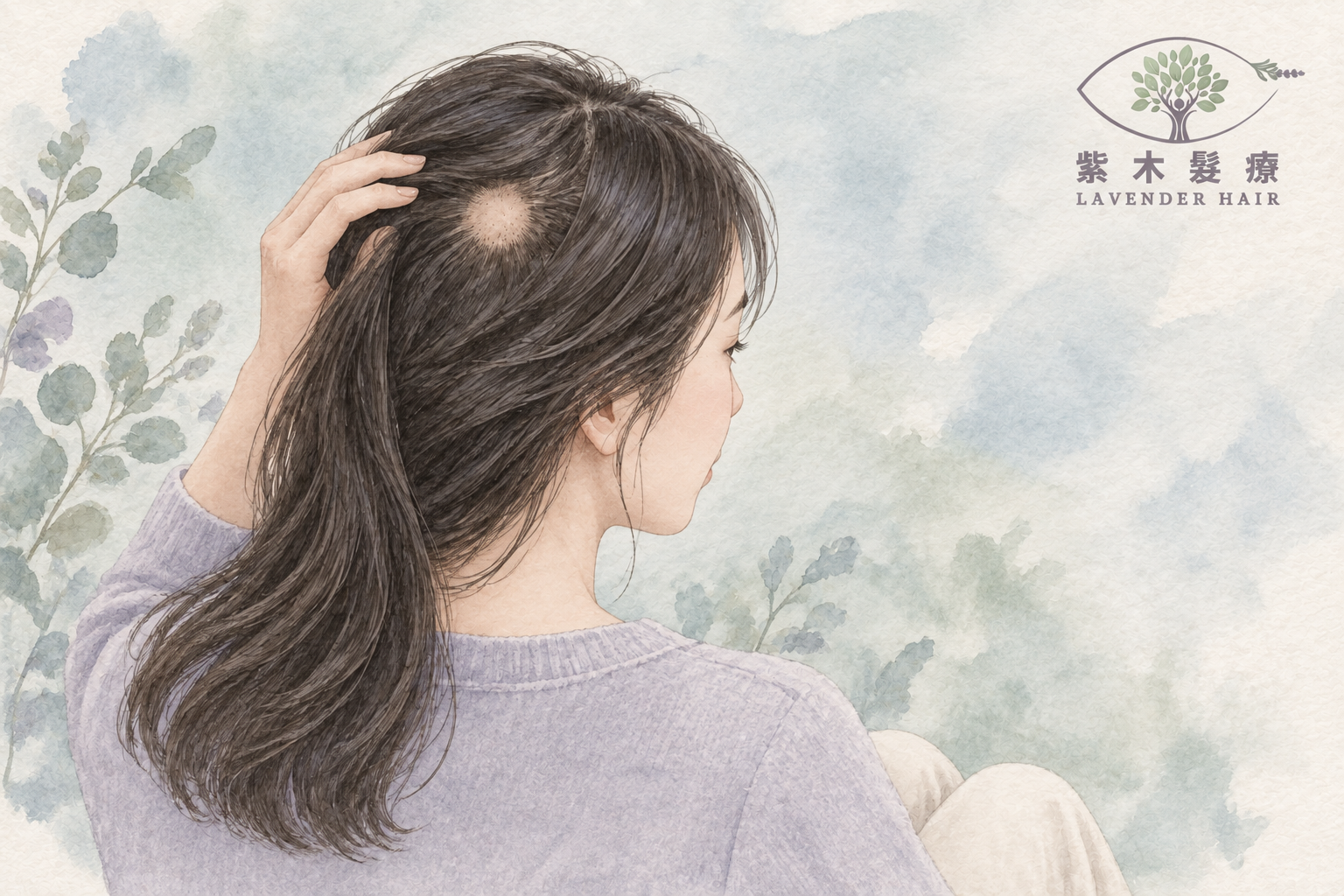
Understand patches of hair loss, everyday care and appropriate support.
Learn More →Learn about dihydrotestosterone, follicle miniaturisation and hereditary hair loss, and understand the limits of everyday hair care.
Learn About DHT & Hair Loss →When searching for “hair growth” or “hair growth treatments”, first clarify whether your concern is scalp comfort, hair appearance or ongoing hair loss. Lavender Hair starts with observing the scalp surface and apparent density, everyday care and follow-up, then discusses products and procedures suited to that day's condition. The causes and treatment of persistent hair loss require medical assessment. Hair growth support treatments generally take around 90 minutes, adjusted to hair condition and arrangements. This is not the combined time including the free scalp check.
Understand the Timeline of Telogen Effluvium & Stress-Related Shedding
Explore Hair Loss Medicines: Effects, Risks & the Role of Everyday Care
See Your First Visit & Service Times
| Care Stage | Our Approach |
|---|---|
| Understand Your Needs | Observe scalp condition and apparent hair density before deciding on products and procedures |
| Plan the Steps | Adjust to oiliness, build-up, comfort and hair condition on the day |
| Explain the Boundaries | Explain the role of everyday care clearly and recommend medical assessment when needed |
Using advanced equipment at 50 to 200 times magnification, we examine the visible condition of your hair, scalp surface and follicular openings, then discuss suitable products or treatments with you.If your needs fall outside our care, we will explain honestly rather than recommend an unsuitable treatment.
Hair Density & SheddingIncreased shedding a few months after childbirth is common, though timing and severity vary. Start with gentle cleansing, less pulling and a record of changes. Care for your scalp and leave a little room for your own rest too.
Understand the Concern & Your Next Step ↗Hair Density & SheddingOne or more sudden bald patches should be assessed by a registered doctor or dermatologist first, without waiting for a salon visit. The colloquial name for patchy loss does not establish its cause: alopecia areata, infection and other conditions need to be distinguished. Our free scalp check only helps identify visible surface conditions and everyday care needs; it cannot diagnose alopecia areata.
Understand the Concern & Your Next Step ↗Hair Density & SheddingA sudden marked increase in shedding should be considered alongside when it started, whether it is diffuse or patchy, and recent health or medication changes. Persistent heavy shedding, bald patches, pain, redness, swelling or weeping need medical assessment first. A free scalp-surface check cannot determine the cause of hair loss and should not delay medical care.
Understand the Concern & Your Next Step ↗Start with the essentials, then explore what they mean for your circumstances.
First record changes in the hairline, part and hair diameter, then use scalp observation at 50 to 200 times magnification to understand oiliness, build-up and surface condition.
Clearly defined or sudden bald patches should be assessed by a registered doctor first. Everyday scalp care may complement care when medical advice allows.