
Does a visible scalp at the whorl mean I have crown thinning?
One photograph is not enough to tell. Compare density and changes under similar conditions first.
Updated: 2026-10-06
Crown thinning
Compare crown photos with similar lighting, styling and wet or dry hair, watching density around the whorl. A single photo showing scalp cannot establish the cause; a record over time is more useful.
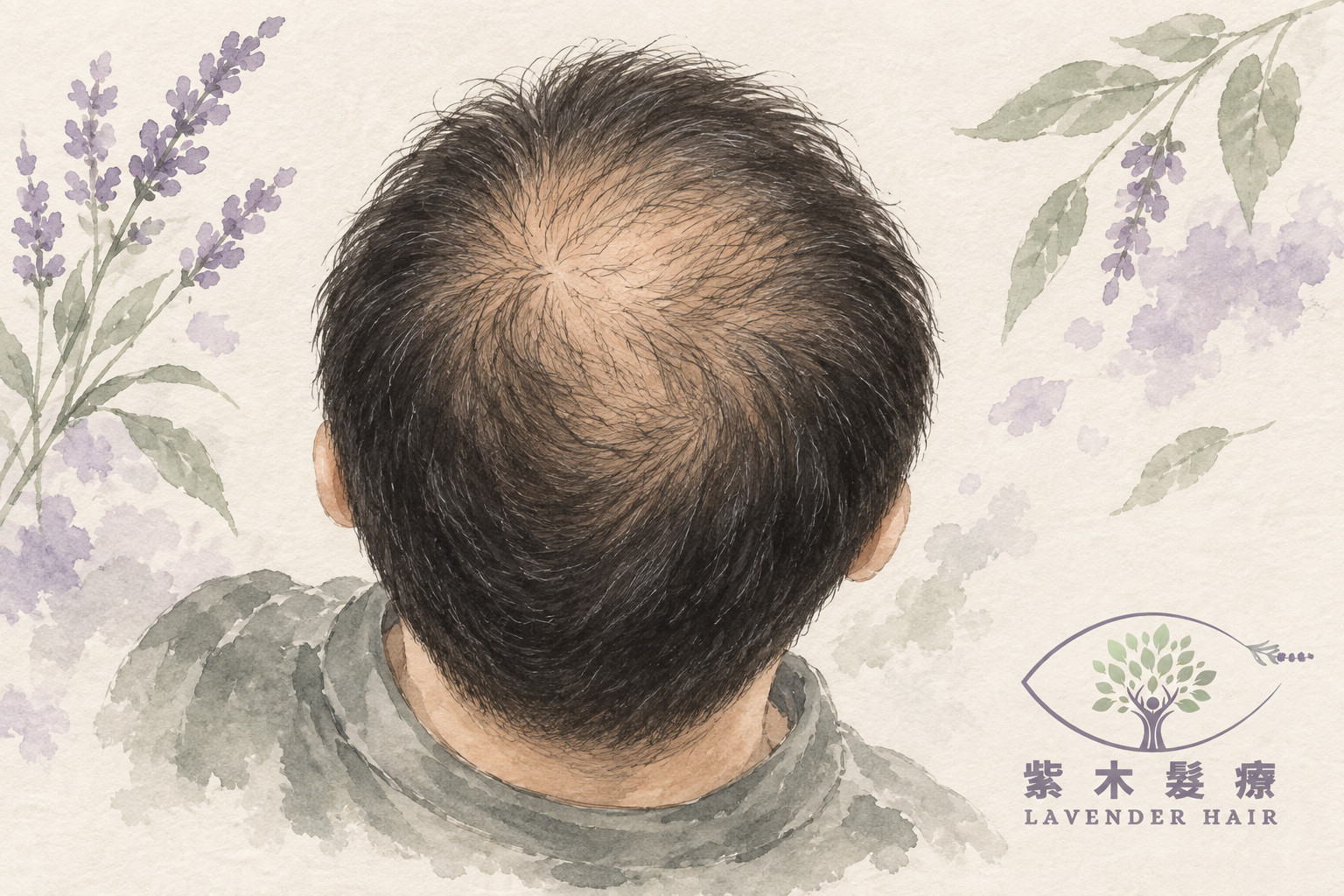
Lighting, the direction of the hair whorl, wet or dry hair and styling all affect how much scalp shows. Ask someone to help take photographs rather than repeatedly pulling your hair to test it.
Gradual crown thinning and a sudden isolated bald patch should not be treated as the same thing. Record the location, extent and when it started, then explain these details to a doctor.
Hair appearance depends on shedding, strand thickness, the hair whorl and lighting. Some hereditary hair loss gradually produces finer strands, so heavy shedding may not come first. If the same area keeps thinning, take crown photographs with dry hair and seek a doctor's assessment.
Understand the link between finer hair and DHT
Exploring treatment options? Read about hair-loss medication, benefits and risks
Similar changes in relatives are worth noting, but family history alone is not a diagnosis. A doctor considers the pattern, timing, health and medication history before discussing suitable treatments.
Gentle cleansing and scalp comfort care can support everyday condition, but cannot guarantee reversal of hereditary hair loss. Discuss medication, medical treatments and hair transplants with a doctor.
Visible strand thickness, density, oil, surface build-up and scalp comfort provide a starting point for everyday care. Images at 50 to 200 times magnification cannot establish hormonal or hereditary causes on their own, or replace medical diagnosis.
Prepared by Lavender Hair · Updated: 6 October 2026.
Bring recent photographs of your hair, your current care products and the questions that matter most to you. Your practitioner will explain visible surface features, then discuss everyday care and next steps.
 Hair Density & Shedding
Watch for changes at the temples and front hairline, comparing photos taken with similar lighting and angles. Hairline shape alone cannot establish the cause. Start by noting when changes began and your care habits.
Understand the Concern & Your Next Step ↗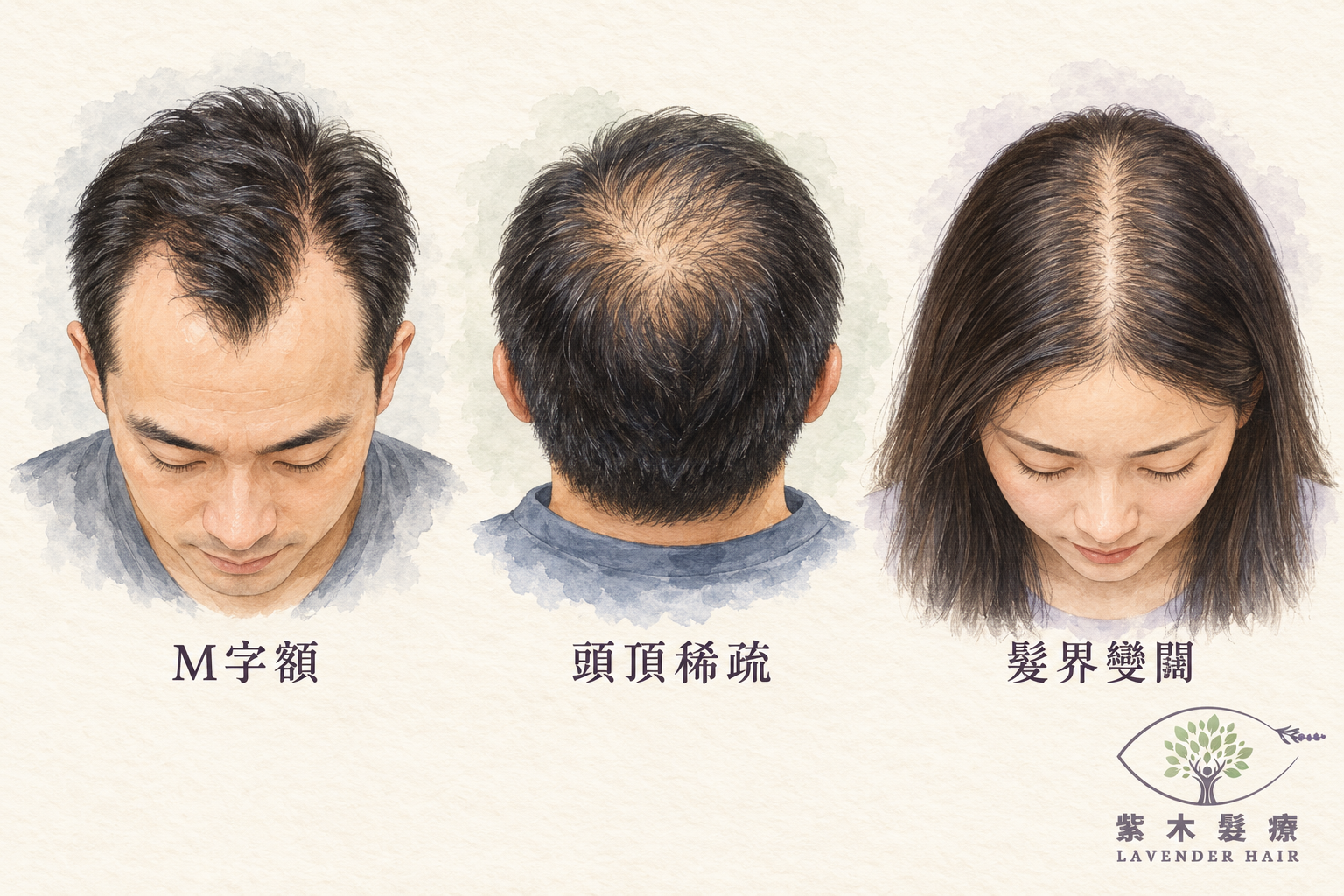 Hair Density & Shedding
A receding hairline, thinning crown and widening part are different visible patterns. Record changes with similar lighting and angles, then explore possible causes, everyday care and available options.
Understand the Concern & Your Next Step ↗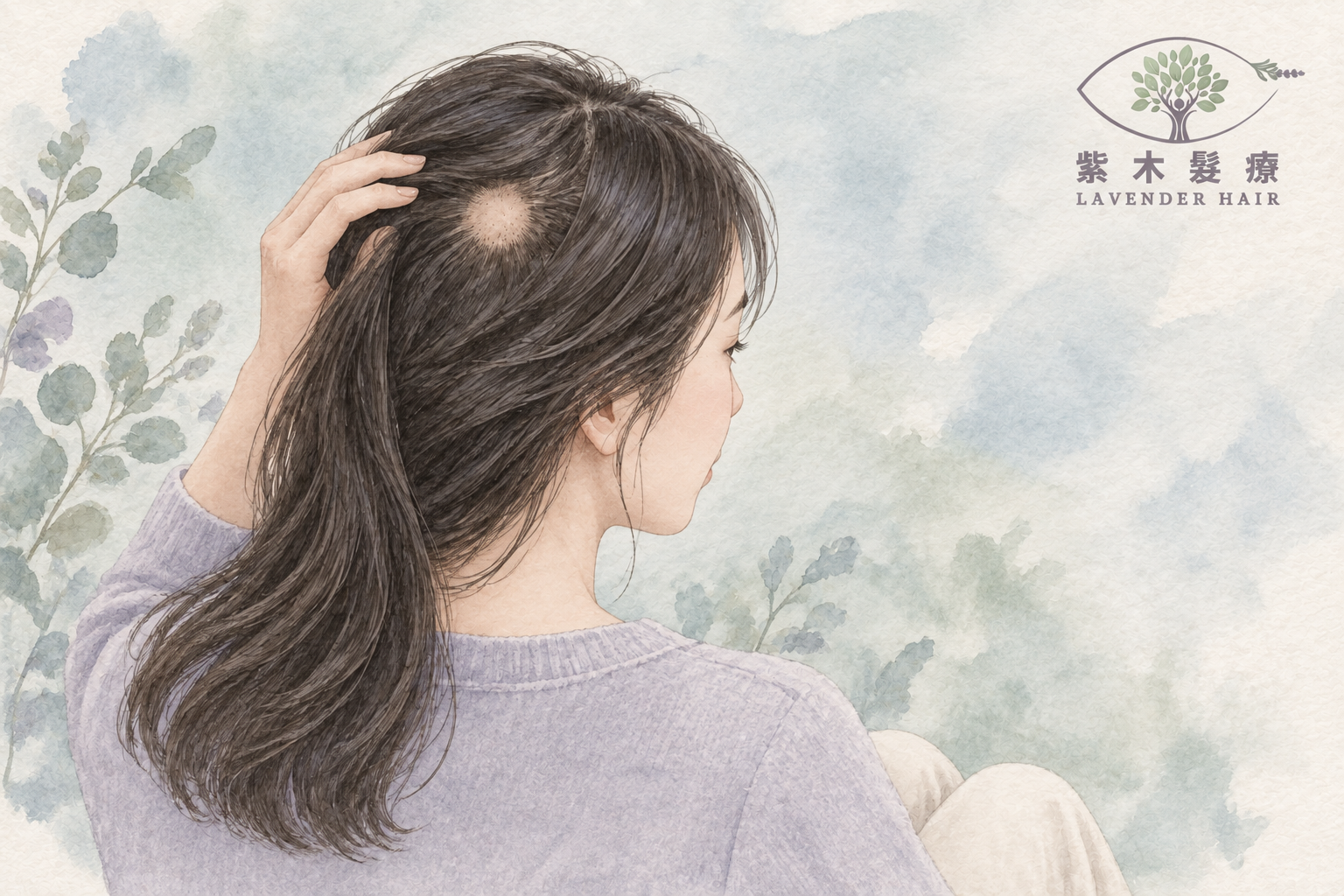 Hair Density & Shedding
If you notice a local change in density, you do not have to guess the cause. Book a free scalp check for a magnified look at the hair, scalp surface and follicle openings, and discuss suitable everyday care. If your needs fall outside Lavender Hair's services, we will explain honestly and will not push a treatment.
Understand the Concern & Your Next Step ↗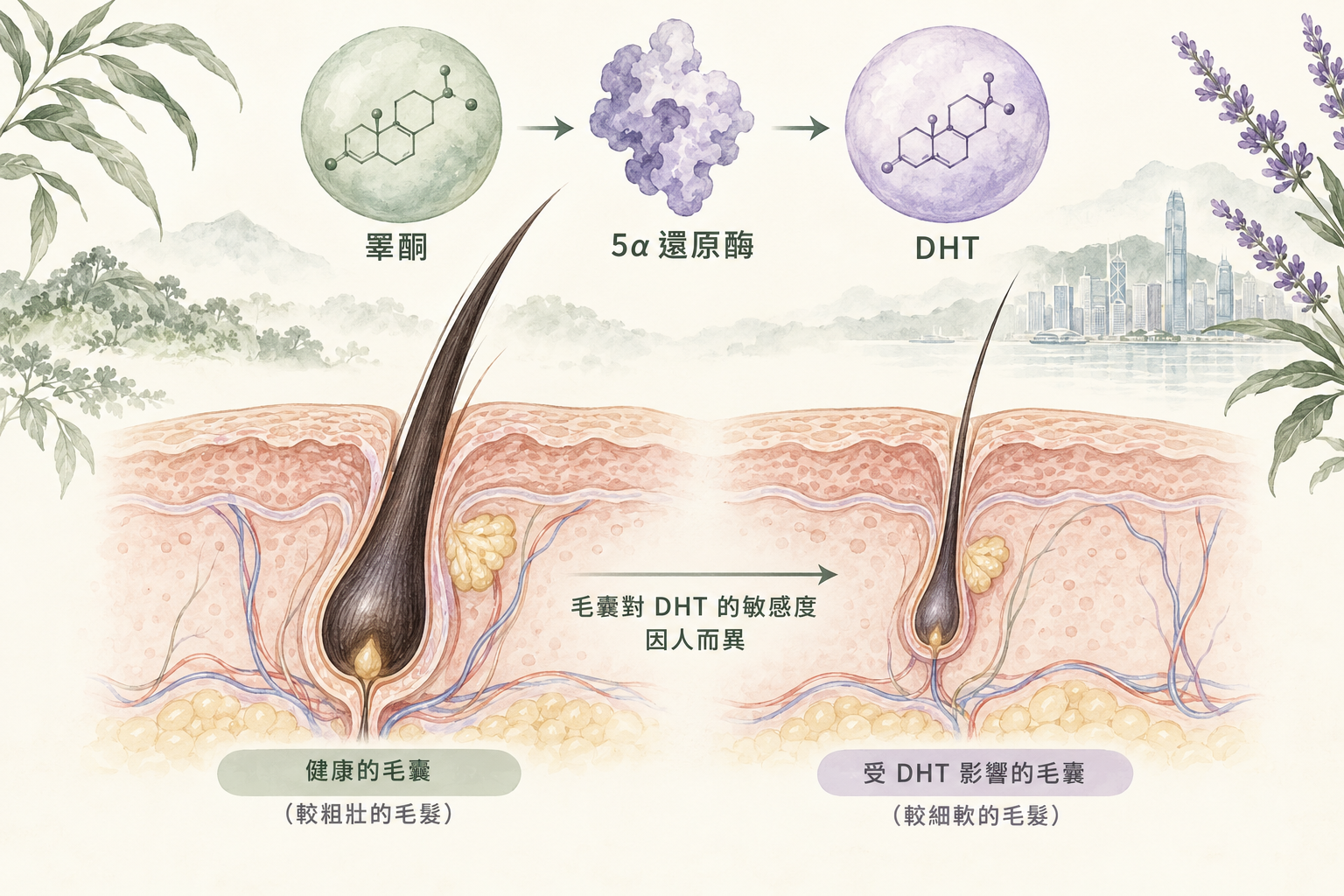 Hair Density & Shedding
DHT, or dihydrotestosterone, is an androgen. Follicles that are more sensitive to DHT may gradually produce finer hairs, a process associated with hereditary hair loss. Shedding does not necessarily mean DHT is responsible. Understanding the pattern is more useful than rushing to buy products.
Understand the Concern & Your Next Step ↗Using advanced equipment at 50 to 200 times magnification, we examine the visible condition of your hair, scalp surface and follicular openings, then discuss suitable products or treatments with you.If your needs fall outside our care, we will explain honestly rather than recommend an unsuitable treatment.
Start with the essentials, then explore what they mean for your circumstances.
One photograph is not enough to tell. Compare density and changes under similar conditions first.
Shedding and changes in density are different things. Persistent thinning in the same area still deserves assessment.