
Does a widening part in women always mean postpartum hair loss?
No. Consider when it began, the pattern, health and medication history first.
Updated: 2026-10-06
Widening hair part · Female hair thinning
Compare photos with a similar part, lighting and wet or dry hair. Note whether the part keeps widening and whether shedding affects the whole scalp. Several factors can contribute; appearance alone cannot establish hereditary or postpartum hair loss.
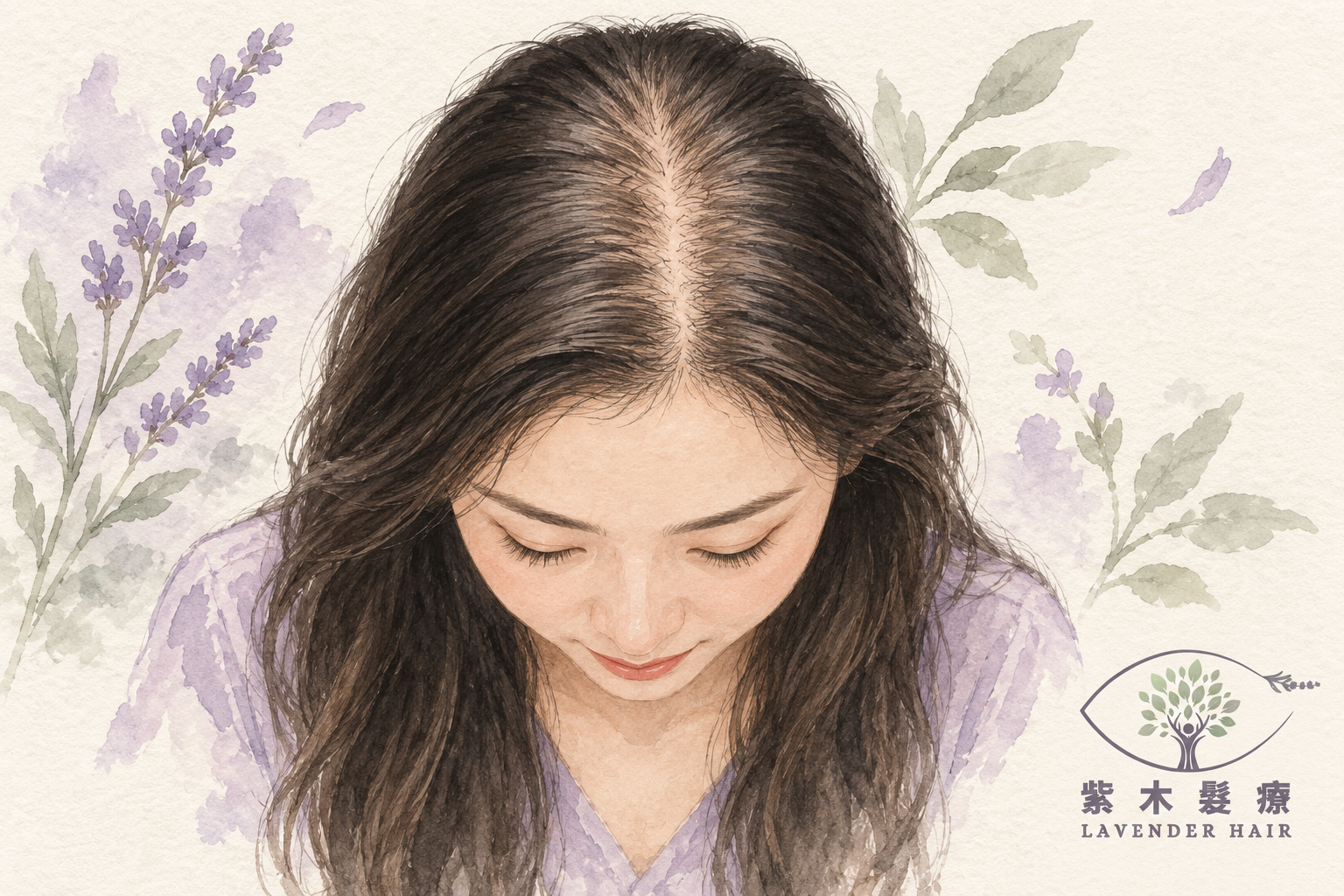
Compare photographs with a similar parting. Do not mistake a different hairstyle or visible scalp through wet hair for worsening density. Note whether hair is becoming flatter and when shedding began.
If your main concern is a gradually widening central part, start here. If widespread shedding increased after childbirth, also read the postpartum guide. The two can overlap, and timing alone is not a diagnosis.
Female pattern hair loss may cause a gradually widening central part and overall thinning. Telogen effluvium commonly causes increased shedding across the scalp. They can overlap, and childbirth or weight loss alone cannot explain every change. Record the timing and pattern so a doctor can decide whether further checks are needed and discuss suitable options.
Understand the timeline of telogen effluvium
Exploring treatment options? Read about hair-loss medication, benefits and risks
Similar changes in relatives are worth noting, but family history alone is not a diagnosis. A doctor considers the pattern, timing, health and medication history before discussing suitable treatments.
Gentle cleansing and scalp comfort care can support everyday condition, but cannot guarantee reversal of hereditary hair loss. Discuss medication, medical treatments and hair transplants with a doctor.
Visible strand thickness, density, oil, surface build-up and scalp comfort provide a starting point for everyday care. Images at 50 to 200 times magnification cannot establish hormonal or hereditary causes on their own, or replace medical diagnosis.
Prepared by Lavender Hair · Updated: 6 October 2026.
Bring recent photographs of your hair, your current care products and the questions that matter most to you. Your practitioner will explain visible surface features, then discuss everyday care and next steps.
 Hair Density & Shedding
Increased shedding a few months after childbirth is common, though timing and severity vary. Start with gentle cleansing, less pulling and a record of changes. Care for your scalp and leave a little room for your own rest too.
Understand the Concern & Your Next Step ↗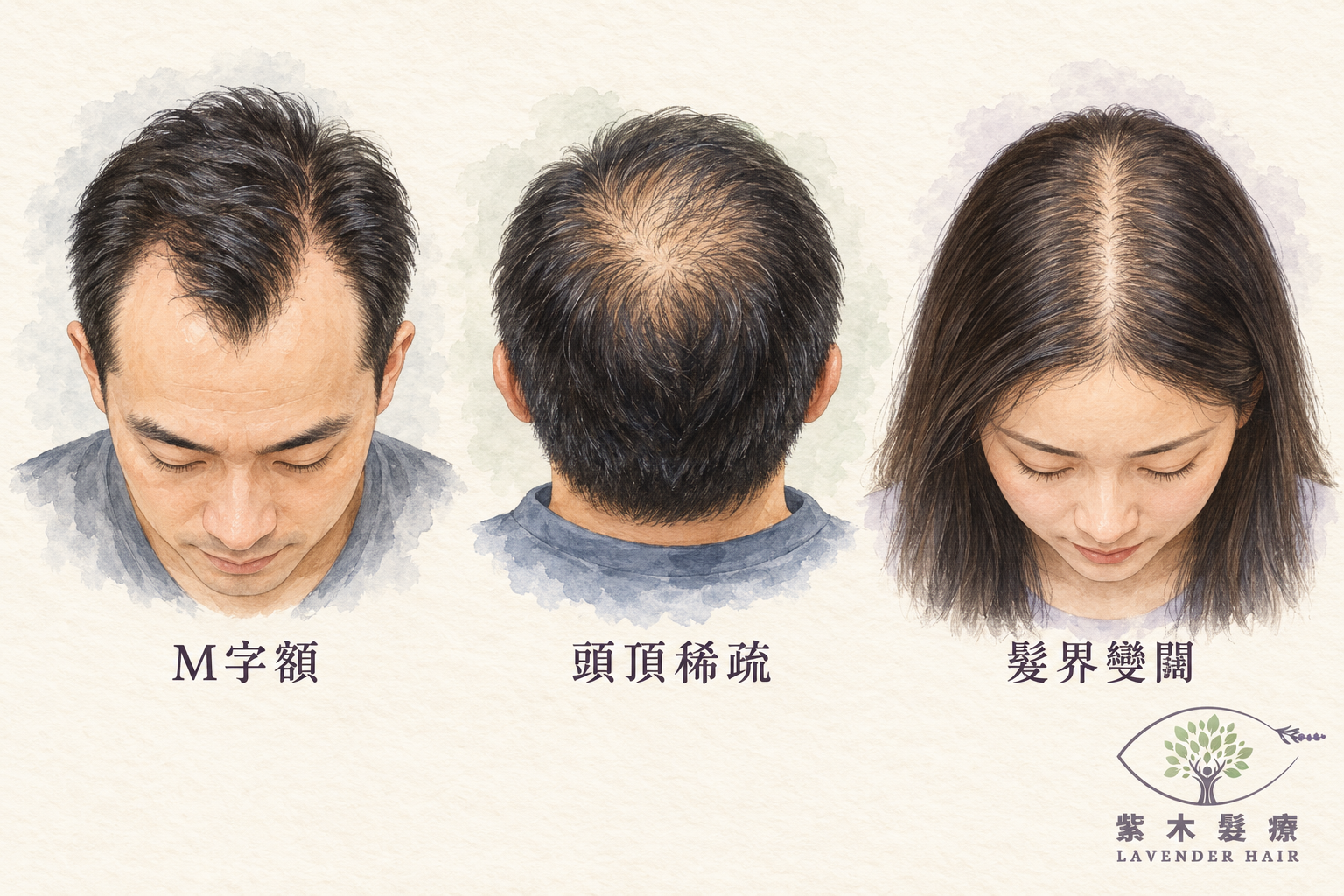 Hair Density & Shedding
A receding hairline, thinning crown and widening part are different visible patterns. Record changes with similar lighting and angles, then explore possible causes, everyday care and available options.
Understand the Concern & Your Next Step ↗ Hair Density & Shedding
Significant weight loss is one physical stressor that may be associated with telogen effluvium, and shedding may start later. Timing alone cannot establish the cause: diet, medicines, health and the pattern of thinning also matter.
Understand the Concern & Your Next Step ↗Using advanced equipment at 50 to 200 times magnification, we examine the visible condition of your hair, scalp surface and follicular openings, then discuss suitable products or treatments with you.If your needs fall outside our care, we will explain honestly rather than recommend an unsuitable treatment.
Start with the essentials, then explore what they mean for your circumstances.
No. Consider when it began, the pattern, health and medication history first.
Changing your part can alter appearance, but cannot establish or treat the cause of hair loss. Persistent thinning deserves assessment.