Can massage cure stress-related hair loss?
No such promise can be made. Massage for relaxation is different from diagnosing and treating the cause of hair loss.
Updated: 2026-10-06
Telogen effluvium · Stress-related hair shedding
Telogen effluvium usually causes increased shedding across the scalp and can appear some time after physical or emotional stress. Recording the timeline and changes helps guide the next step. Being busy recently is not enough to establish the cause.
When more hairs enter the resting and shedding phases early, shedding across the scalp may increase. This is called telogen effluvium. It may be associated with illness, childbirth, significant weight loss or major stress, although some people have no clear trigger.
The hair cycle involves a delay. Telogen effluvium may become noticeable around three months after a trigger. Reviewing health, diet and medication changes over the previous few months is more useful than focusing only on this week's stress. Do not stop prescription medication yourself.
The shedding phase commonly lasts around three to six months, and visible fullness may take longer to recover. The course is not the same for everyone. If shedding lasts beyond six months, thinning worsens or bald patches appear, a doctor should assess other or overlapping causes.
British Association of Dermatologists: telogen effluvium and its timeline
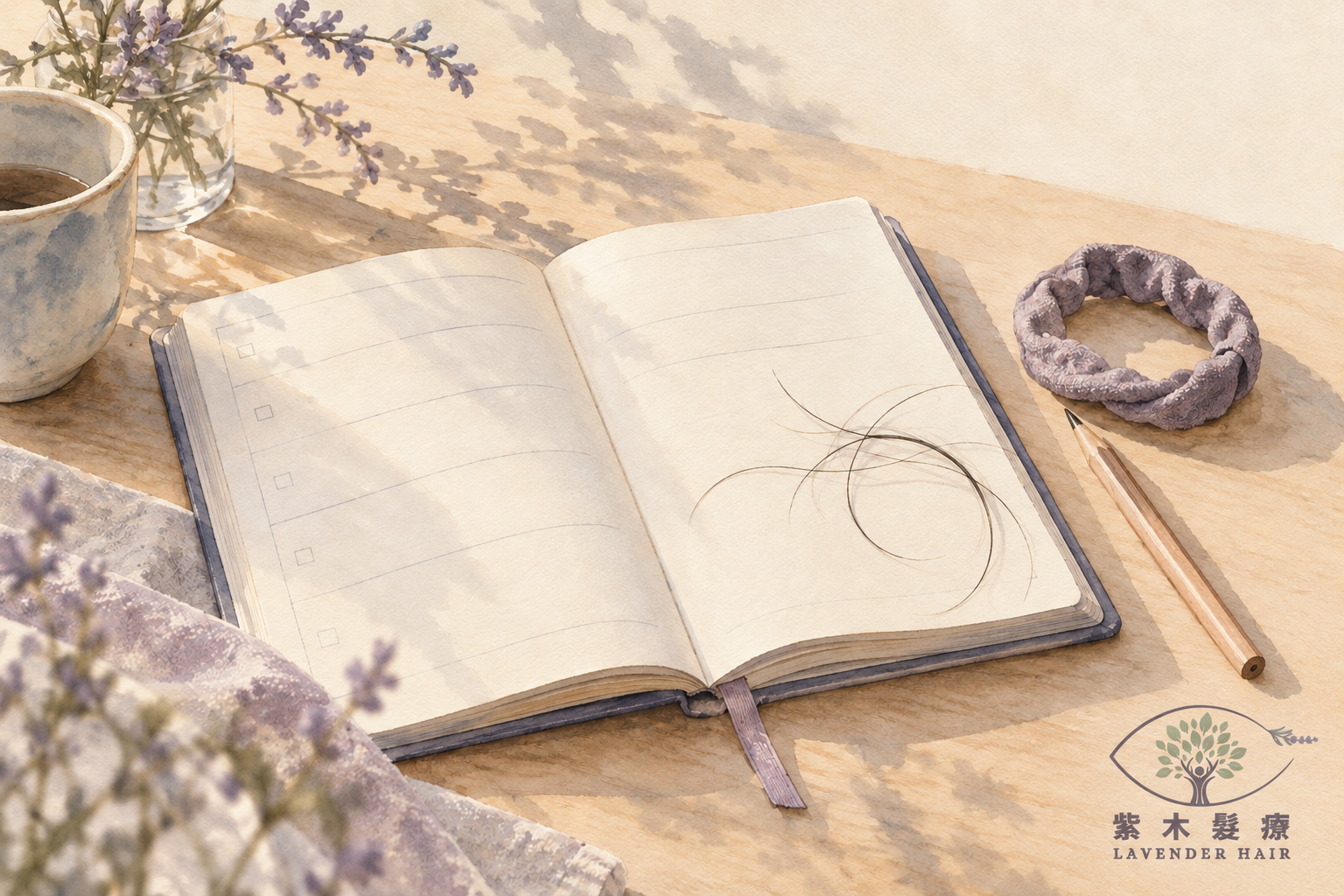
Keep illness, childbirth, work stress, weight loss and shedding dates in the same record. Shedding may not happen at the same time as the event, and several factors may overlap.
A comfortable care session can be part of everyday rest, but cannot guarantee that shedding will stop. Persistent shedding, bald patches or other symptoms deserve a doctor's assessment first.
Restful scalp care offers gentle cleansing, comfortable pressure on the head and a quiet experience. Tell us what pressure feels right. We start with your scalp's condition and comfort that day, without promising to cure stress-related hair loss.
Regular photographs from similar angles are more useful than repeated hair-pulling tests. Bring your main concerns and photographs to a professional to work through the next steps.
Prepared by Lavender Hair · Updated: 6 October 2026.
Stress is one clue about recent life, but cannot establish the cause of hair loss on its own. A relaxation experience is a separate lifestyle choice, not a hair-loss treatment.
 Lifestyle and Relaxation
Restful scalp care offers gentle cleansing, comfortable pressure on the head and quiet relaxation. We start with how your scalp feels and what you need that day. Pressure and pace can be adjusted together.
Understand the Concern & Your Next Step ↗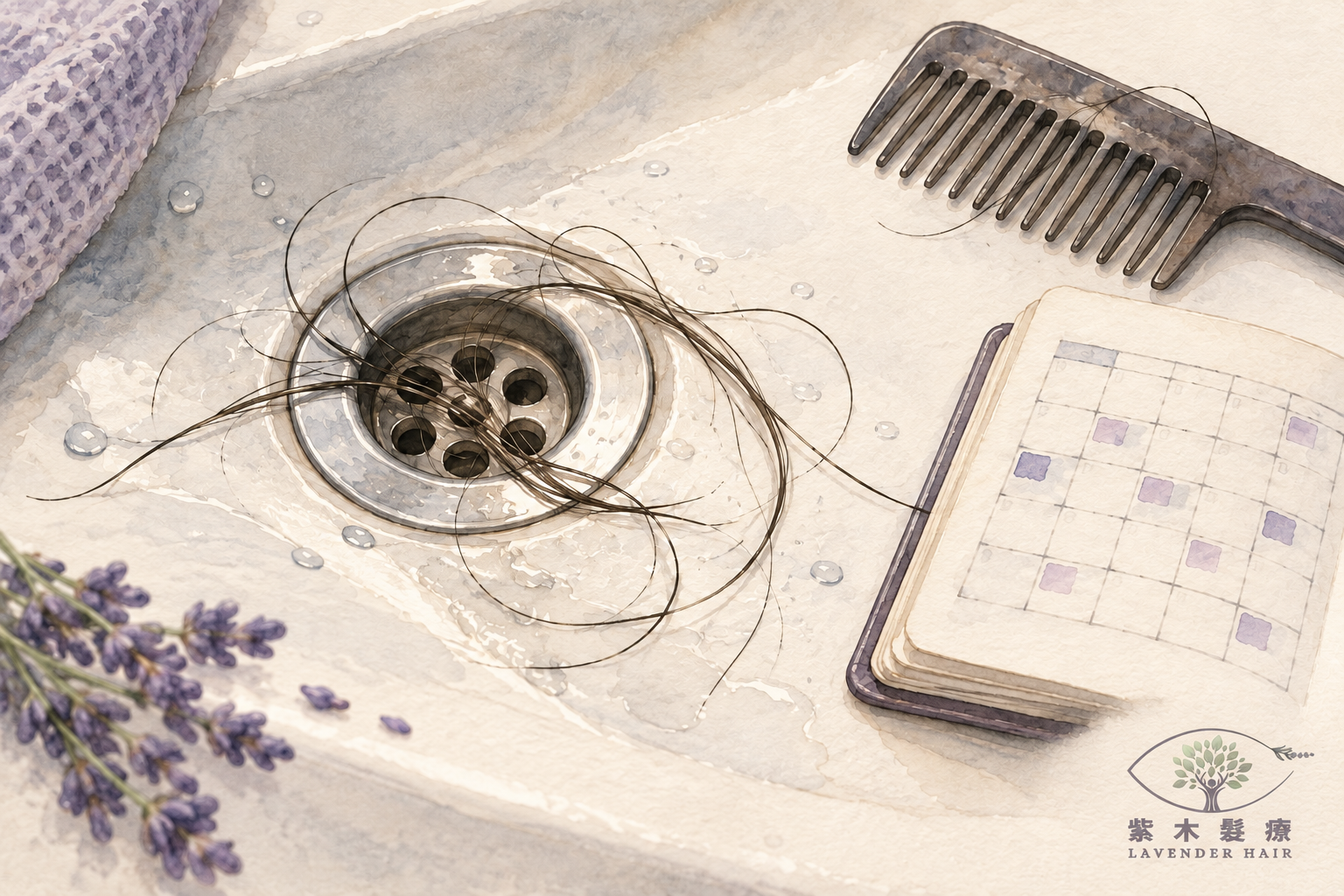 Hair Density & Shedding
Record when it began, whether shedding is widespread, and any changes to your part or hairline. Time between washes, hair length and breakage all affect how hair in the drain looks. One wash is no reason to blame yourself.
Understand the Concern & Your Next Step ↗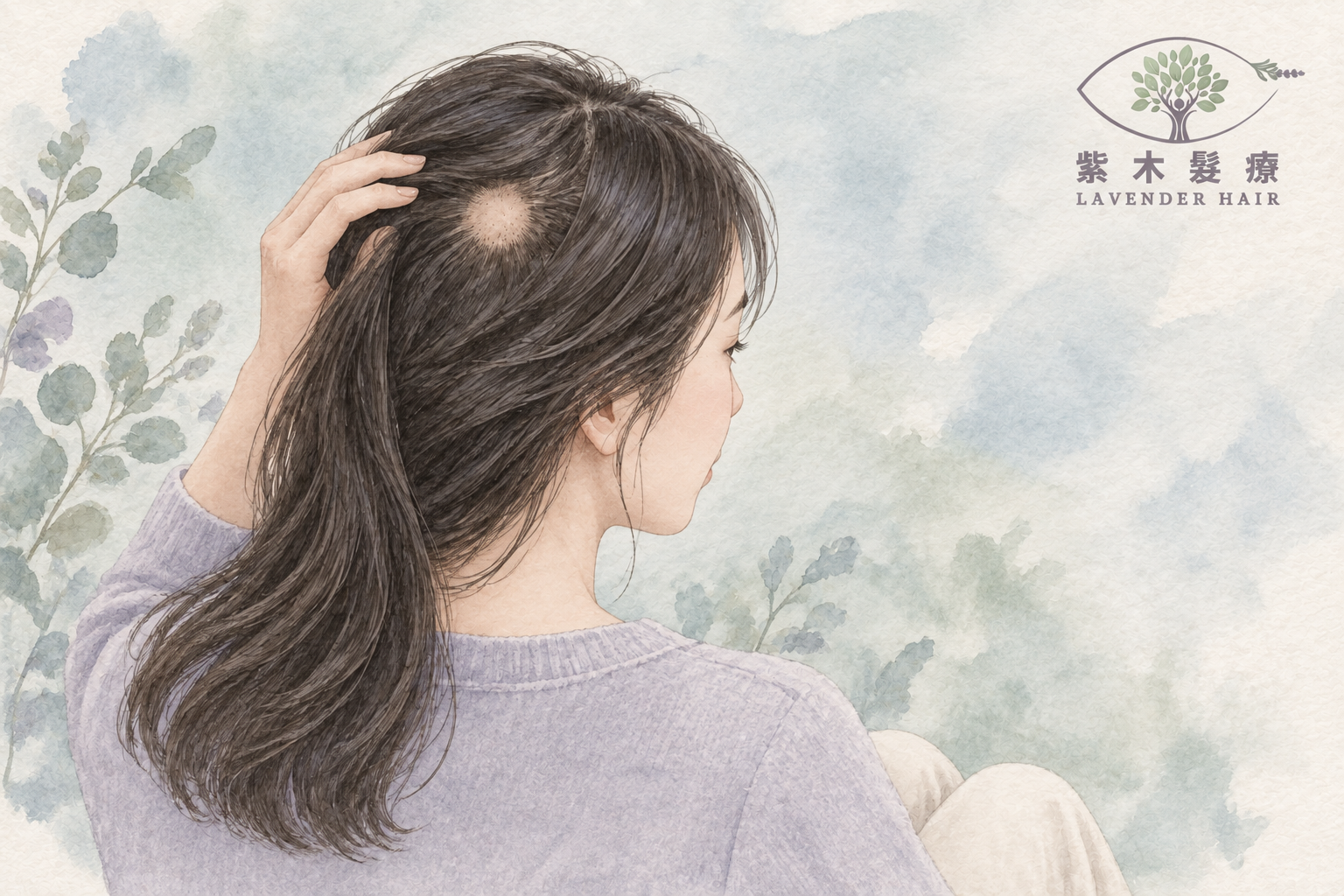 Hair Density & Shedding
If you notice a local change in density, you do not have to guess the cause. Book a free scalp check for a magnified look at the hair, scalp surface and follicle openings, and discuss suitable everyday care. If your needs fall outside Lavender Hair's services, we will explain honestly and will not push a treatment.
Understand the Concern & Your Next Step ↗Using advanced equipment at 50 to 200 times magnification, we examine the visible condition of your hair, scalp surface and follicular openings, then discuss suitable products or treatments with you.If your needs fall outside our care, we will explain honestly rather than recommend an unsuitable treatment.
Start with the essentials, then explore what they mean for your circumstances.
No such promise can be made. Massage for relaxation is different from diagnosing and treating the cause of hair loss.
It cannot be attributed to stress alone. Alopecia areata involves different factors, and bald patches should be assessed by a doctor.