
Does an oily scalp need deep-cleansing shampoo every day?
Adjust washing frequency and cleansing strength to oil, dirt and comfort after washing. There is no single routine for every scalp.
Updated: 2026-10-06
Oily scalp · Flat hair roots
Consider how quickly oil builds up, how often you wash, styling-product residue, dead skin and dryness after washing. The right level of cleansing helps keep roots fresh while caring for scalp comfort.
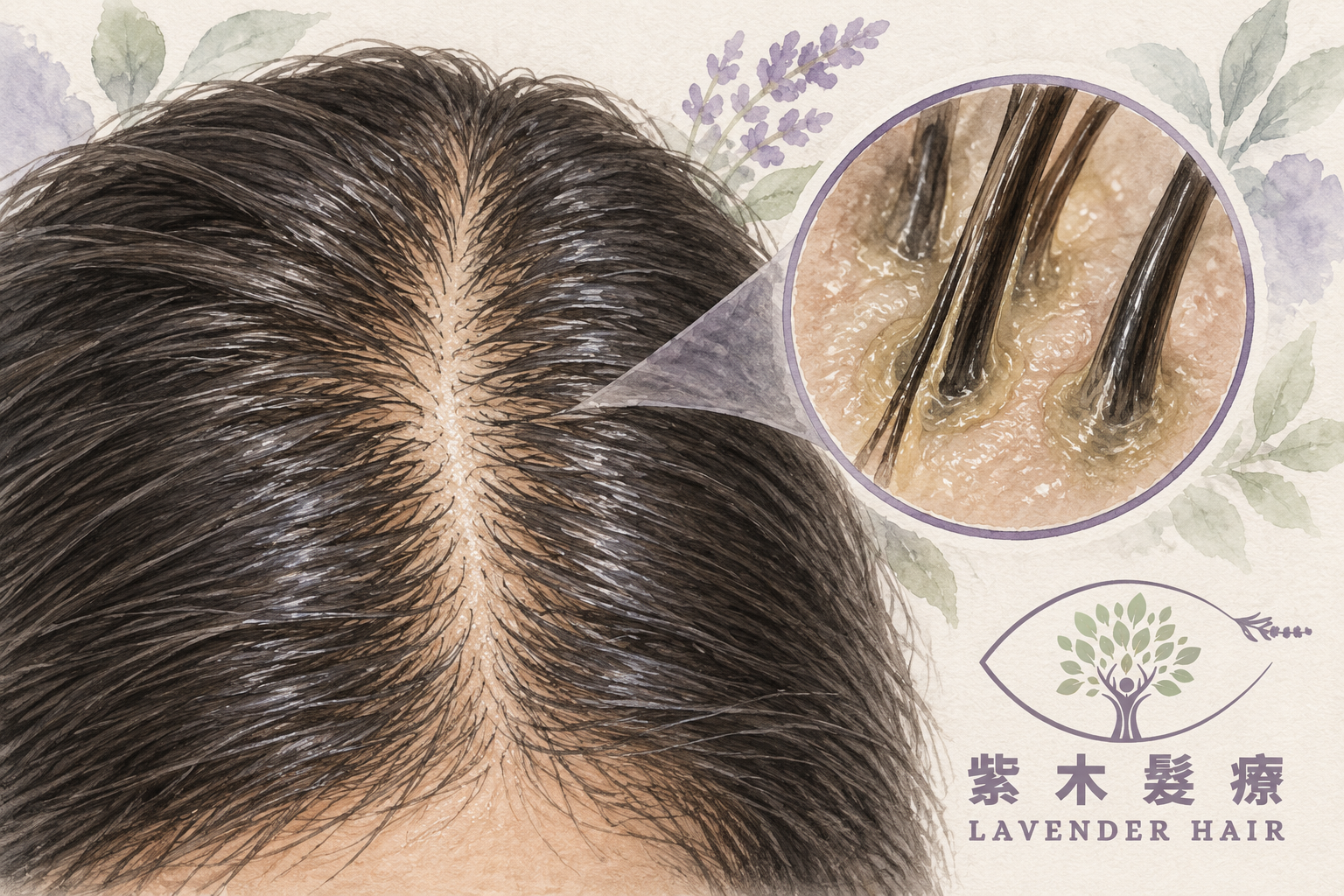
How soon after washing does oil return? Is scalp oil or styling residue flattening the roots? Are there also flakes, itching or tender bumps?
Cleanse appropriately, rinse thoroughly and use your fingertips gently. Adjust products according to scalp dryness and surface build-up.
Shine, strands sticking together, deposits near follicle openings, white flakes and redness are separate surface clues worth recording. Lavender Hair explains the images alongside oil-return timing, washing habits and comfort after washing to clarify cleansing and moisture needs. Images cannot measure oil production or prove from deposits alone that a follicle can no longer grow hair.
Oiliness and flat roots concern everyday hair care. Continuing changes to the part or hairline are a separate issue to track. Oiliness alone does not establish blocked follicles or the cause of hair loss.
Tell your practitioner when oil returns, how often you wash, which styling products you use and whether your scalp feels tight afterwards. Observation at 50 to 200 times magnification brings visible features into focus so we can discuss comfortable product choices, rather than starting with the strongest cleanser.
Prepared by Lavender Hair · Updated: 6 October 2026.
Bring recent photographs of your hair, your current care products and the questions that matter most to you. Your practitioner will explain visible surface features, then discuss everyday care and next steps.
Using advanced equipment at 50 to 200 times magnification, we examine the visible condition of your hair, scalp surface and follicular openings, then discuss suitable products or treatments with you.If your needs fall outside our care, we will explain honestly rather than recommend an unsuitable treatment.
Start with the essentials, then explore what they mean for your circumstances.
Adjust washing frequency and cleansing strength to oil, dirt and comfort after washing. There is no single routine for every scalp.
First distinguish cleansing, comfort and hair density needs. Oiliness alone is not enough to choose a serum.