
Can I scrub or squeeze scalp spots away?
Avoid squeezing, scratching the skin open or repeated rubbing. Pain, pus, oozing or persistent recurring symptoms need a doctor's assessment first.
Updated: 2026-10-06
Scalp pimples · Sensitive scalp
If tender scalp bumps come with persistent pain, marked redness or swelling, pus or oozing, see a doctor first rather than waiting for a salon visit. Do not squeeze or rub the area, or replace medical care with deep cleansing, massage or a change of product. Arrange gentle daily care according to your scalp's condition and medical advice.
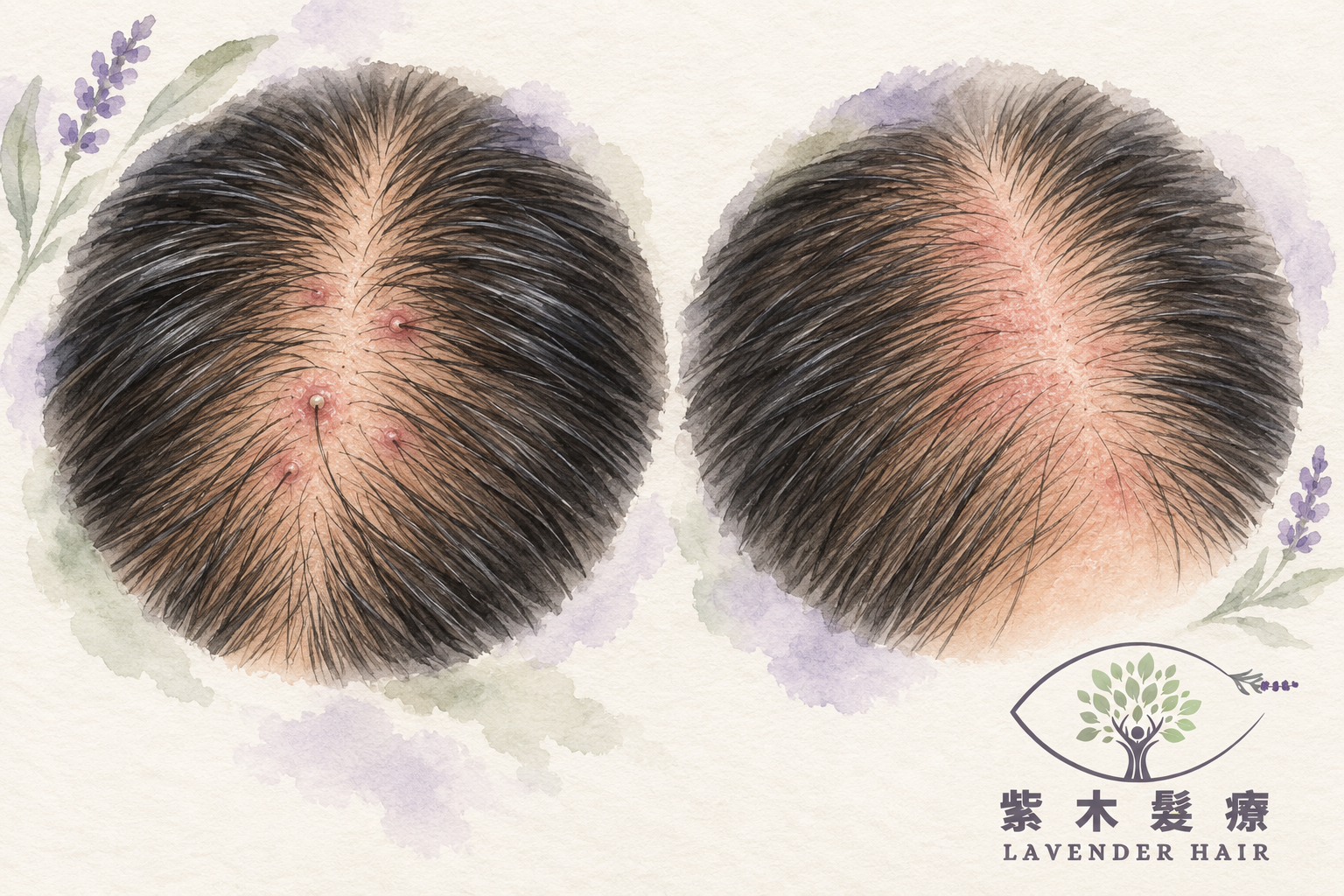
Cleanse gently, rinse styling products thoroughly, wash with your fingertips, clean hats and pillowcases regularly, and pause newly introduced products that may be irritating.
When the skin is intact and suitable for care, we offer gentle cleansing and everyday scalp-care guidance. Pain, oozing or signs of infection prompt medical assessment first.
Describe the location, how long it has been present, whether it itches or hurts, and any white pus-filled tips, crusting or oozing. These should not all be treated as simple oiliness. Magnified images alone cannot distinguish every infection, product reaction or skin condition.
Avoid squeezing tender bumps or scraping off crusts with tools. Significant pain, pus, oozing, persistent redness or swelling, or rapid spread should be assessed by a doctor first. Discuss cleansing, moisture and products once the scalp is suitable for care.
Photograph packaging and ingredients, and note whether discomfort followed colouring, a shampoo change or a styling product. Different product reactions and scalp conditions can look similar. The word “sensitive” alone is not enough to choose a treatment.
Tell us about any tender bumps, broken skin, redness, swelling and past reactions before considering an appointment. Natural Shine Colour Care includes a pre-colour check and protective steps, but protection does not mean zero allergy risk, or that colouring an inflamed scalp is suitable.
Prepared by Lavender Hair · Updated: 6 October 2026.
Pain, significant inflammation or broken skin should be assessed by a doctor first. Explore cleansing strength and product choices once your scalp is suitable for everyday care.
Using advanced equipment at 50 to 200 times magnification, we examine the visible condition of your hair, scalp surface and follicular openings, then discuss suitable products or treatments with you.If your needs fall outside our care, we will explain honestly rather than recommend an unsuitable treatment.
Start with the essentials, then explore what they mean for your circumstances.
Avoid squeezing, scratching the skin open or repeated rubbing. Pain, pus, oozing or persistent recurring symptoms need a doctor's assessment first.
Identify possible triggers first, then consider the full formulation and instructions. Do not judge suitability by “natural” or “gentle” labels alone.