
Can a scalp check at 50 to 200 times magnification measure DHT?
No. Magnification shows visible surface and hair features. It cannot measure DHT or establish a hormonal cause.
Updated: 2026-10-06
DHT · Dihydrotestosterone · Hair miniaturisation
DHT, or dihydrotestosterone, is an androgen. Follicles that are more sensitive to DHT may gradually produce finer hairs, a process associated with hereditary hair loss. Shedding does not necessarily mean DHT is responsible. Understanding the pattern is more useful than rushing to buy products.
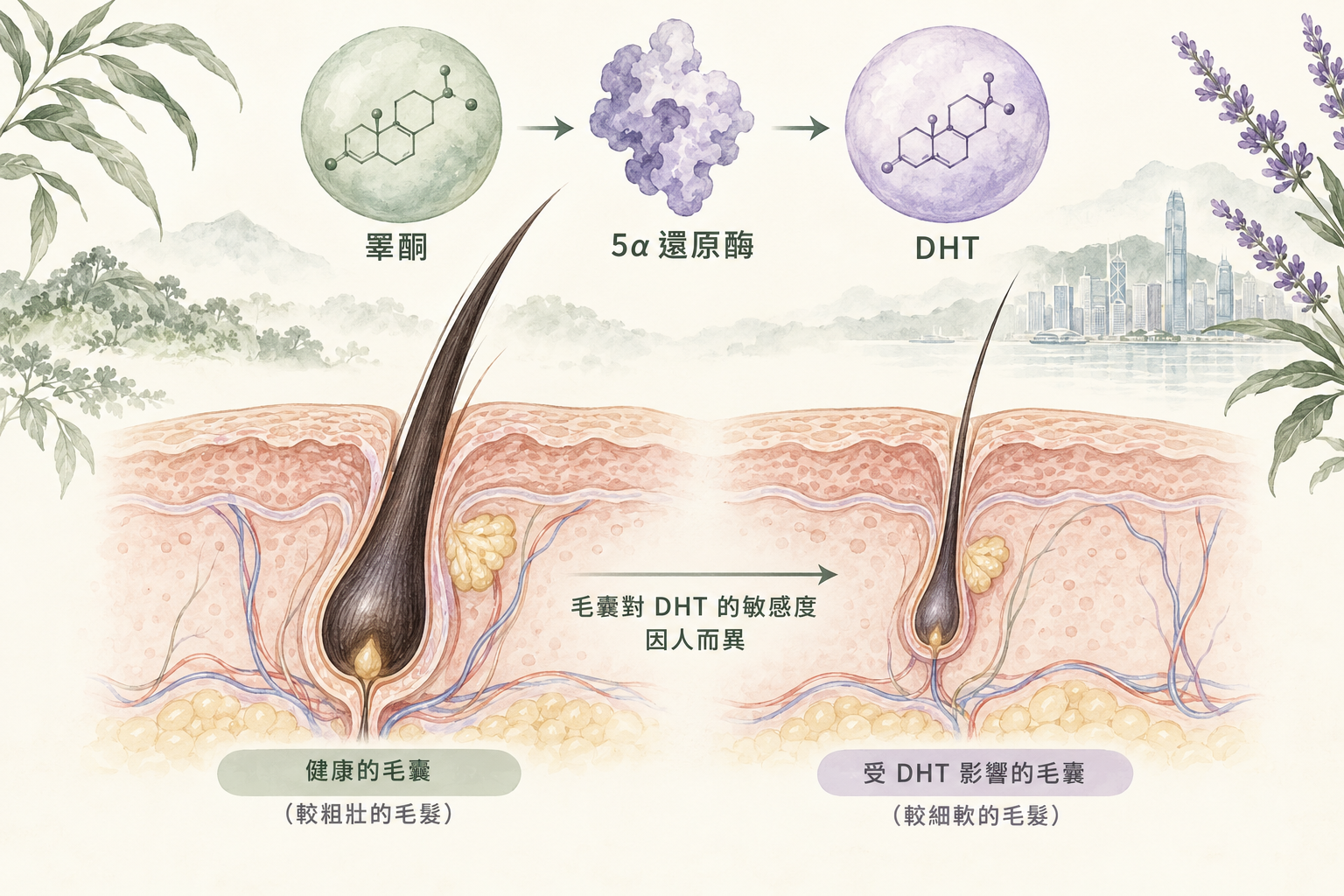
Testosterone is an androgen hormone. The body uses the enzyme 5α-reductase (5-alpha-reductase) to convert some testosterone into dihydrotestosterone, or DHT. In short: testosterone → conversion by 5α-reductase → DHT. This is a normal process. What matters is that some follicles are more sensitive to DHT; having DHT does not mean everyone will experience the same hair loss.
No. DHT has normal roles in the body, including development of male reproductive organs and male characteristics such as body hair. It should not be treated as something harmful to remove yourself. Muscle and bone health also involve testosterone and other hormones, and cannot all be attributed to DHT.
Hereditary hair loss involves genetic and hormonal factors. Some follicles are more sensitive to DHT, their growth phase shortens and they gradually produce finer hair. This is called follicular miniaturisation. Daily shedding is only part of the picture; long-term hairline and density changes matter too.
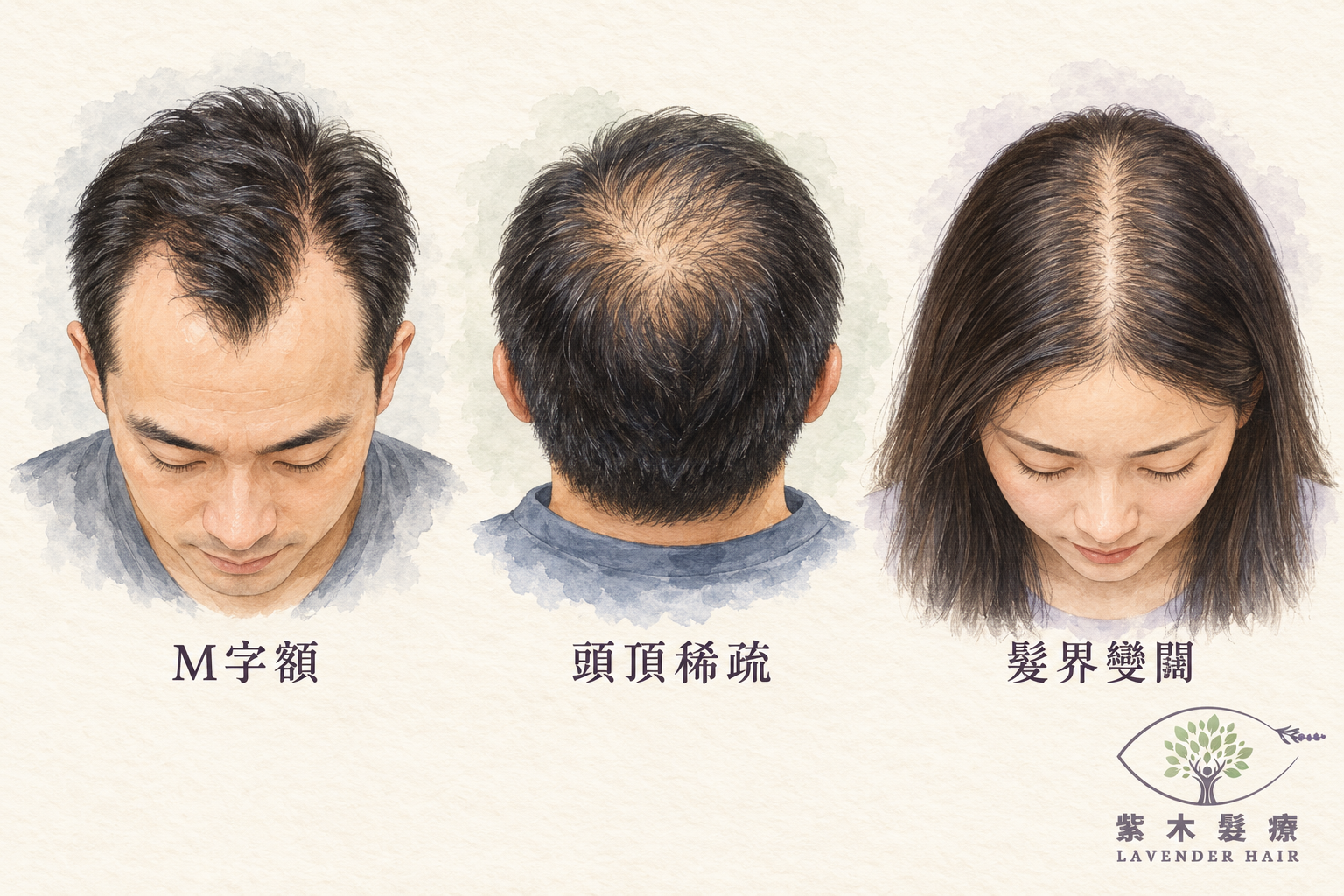
Appearance alone cannot reveal hormone levels. Men may develop receding temples or crown thinning, while women may have a gradually widening part. The pattern, timing and family history are all useful to consider. Genetic factors can come from either parent.
Cleansing, moisturising and scalp comfort are different from changing hormonal activity. A “hair-growth” or “DHT blocker” label does not establish that a shampoo can reverse hereditary hair loss. Check the full formulation, intended use and relevant evidence first.
Finasteride mainly inhibits 5α-reductase, reducing the conversion of testosterone to DHT. This is not the same as directly lowering testosterone. Other anti-androgen medicines can act at androgen receptors: spironolactone primarily blocks these receptors and is suitable for different people. Minoxidil supports hair growth without inhibiting 5α-reductase. Hair-loss medicines cannot simply be divided into “lowering testosterone” and “lowering DHT”. Suitability, side effects and pregnancy-related restrictions need assessment by a prescribing professional. Do not start, increase or stop medication on your own.
The free scalp check looks at visible strand thickness, density, scalp surface and follicle openings. Alongside your photographs and routine records, this helps explain everyday care needs. Magnified images do not measure DHT or show follicles deep beneath the skin. We may suggest products or care as appropriate. If your needs fall outside our services, we will explain honestly and will not push a treatment.
Whether you have just noticed a hairline change or have been concerned for some time, note when it began and take photographs in similar lighting, from similar angles and with similar wet or dry conditions. Bring these records to your free scalp check so we can help you understand everyday care options.
Prepared by Lavender Hair · Updated: 6 October 2026.
Discuss treatment options and medication risks with a doctor or pharmacist. Shampoo and ordinary scalp observation are not DHT tests or medical hair-growth treatments.
 Hair Density & Shedding
A receding hairline, thinning crown and widening part are different visible patterns. Record changes with similar lighting and angles, then explore possible causes, everyday care and available options.
Understand the Concern & Your Next Step ↗ Hair Density & Shedding
Watch for changes at the temples and front hairline, comparing photos taken with similar lighting and angles. Hairline shape alone cannot establish the cause. Start by noting when changes began and your care habits.
Understand the Concern & Your Next Step ↗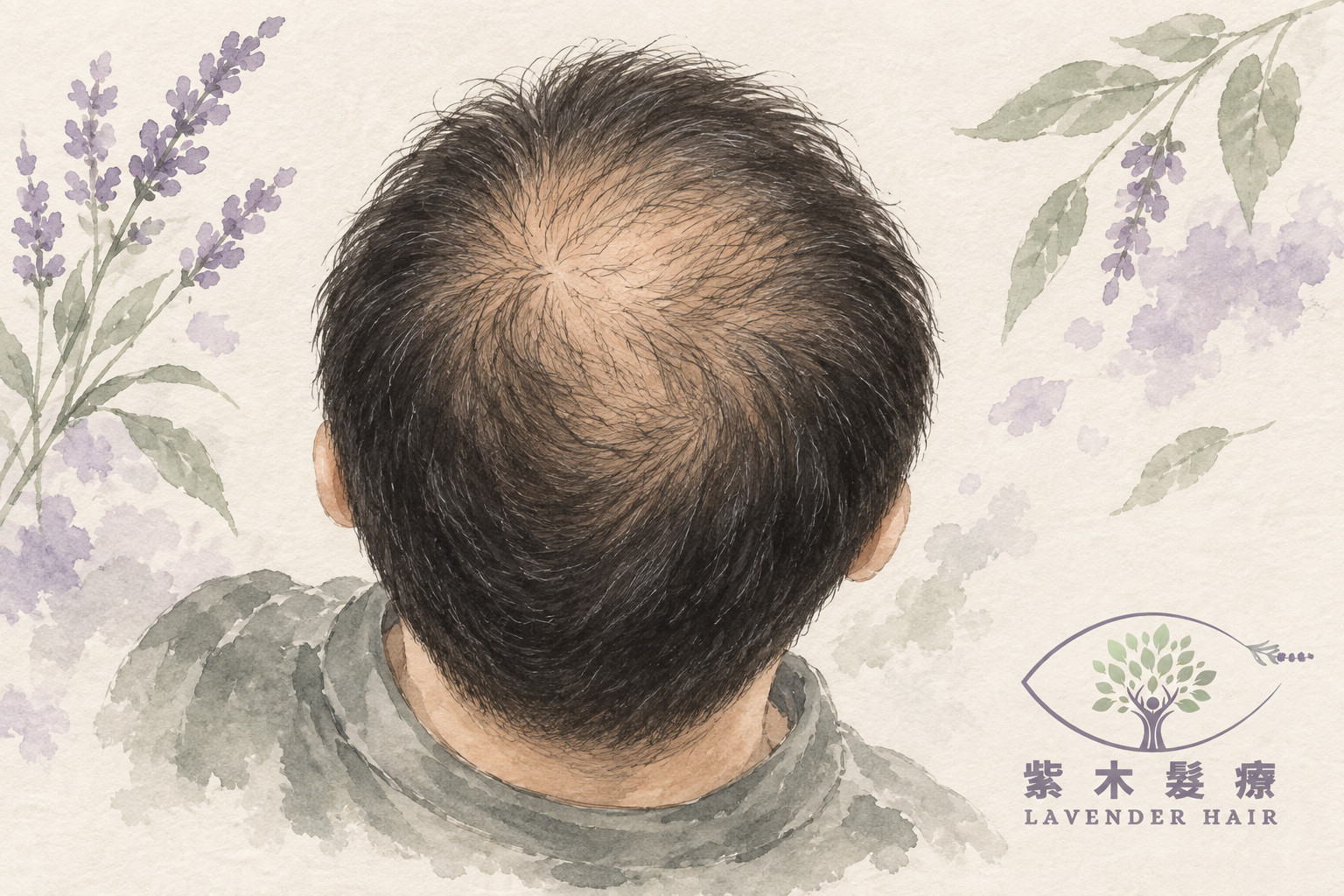 Hair Density & Shedding
Compare crown photos with similar lighting, styling and wet or dry hair, watching density around the whorl. A single photo showing scalp cannot establish the cause; a record over time is more useful.
Understand the Concern & Your Next Step ↗Using advanced equipment at 50 to 200 times magnification, we examine the visible condition of your hair, scalp surface and follicular openings, then discuss suitable products or treatments with you.If your needs fall outside our care, we will explain honestly rather than recommend an unsuitable treatment.
Start with the essentials, then explore what they mean for your circumstances.
No. Magnification shows visible surface and hair features. It cannot measure DHT or establish a hormonal cause.
No. Postpartum changes, recent health changes, breakage and other forms of hair loss need separate consideration.
Surface cleansing is not the same as changing hormonal activity. Hair care mainly supports cleanliness, comfort and hair condition.