
Does shedding during washing mean washing caused my hair loss?
Seeing hair during a wash is not enough to reach that conclusion. Recording the interval between washes and overall density trends is more useful than one look at the drain.
Updated: 2026-10-06
Sudden hair shedding
A sudden increase in shedding needs to be considered alongside when it started, whether it is widespread or patchy, and recent health or medication changes. Persistent heavy shedding, bald patches, pain, redness, swelling or oozing should be assessed by a doctor first.
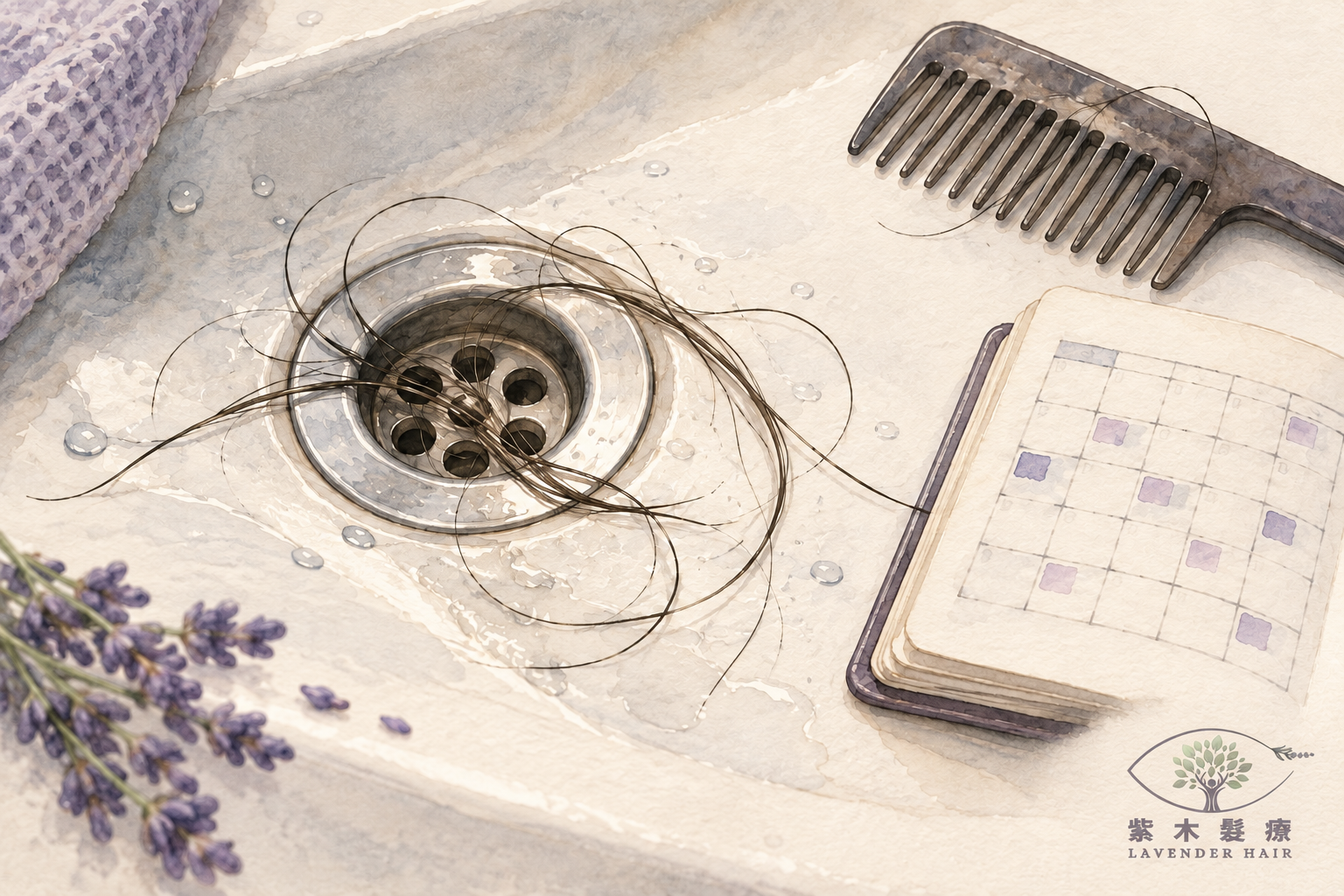
Photograph the part and hairline in similar lighting and from similar angles. Note the time between washes, when shedding began, and recent childbirth, fever, weight loss, stress or medication changes. There is no need to count every hair repeatedly. Focus on trends and changes in density.
Are you seeing mostly full-length strands or short pieces of different lengths? Short hairs may be breakage rather than new growth. Looking at the root alone cannot establish a diagnosis. Ongoing thinning needs consideration of the scalp, personal history and professional assessment.
To understand widespread shedding and the resting phase, explore the telogen effluvium timeline. Understand the telogen effluvium timeline
Fear of shedding should not lead to repeated pulling, testing or avoiding washing altogether. Gentle cleansing, suitable conditioning, less heat and looser hairstyles support the hair shaft. These steps do not address every cause of hair loss.
Bring photographs, recent products and your main concerns. Lavender Hair's observation at 50 to 200 times magnification can explain visible oil, surface build-up, scalp features and strand thickness. Blood-related, hormonal or disease-related causes need a doctor's assessment.
Prepared by Lavender Hair · Updated: 6 October 2026.
Bring recent hair photographs and details of health, diet and medication changes to a medical assessment. Everyday care for cleansing and comfort can be discussed separately; it does not replace assessment of the cause.
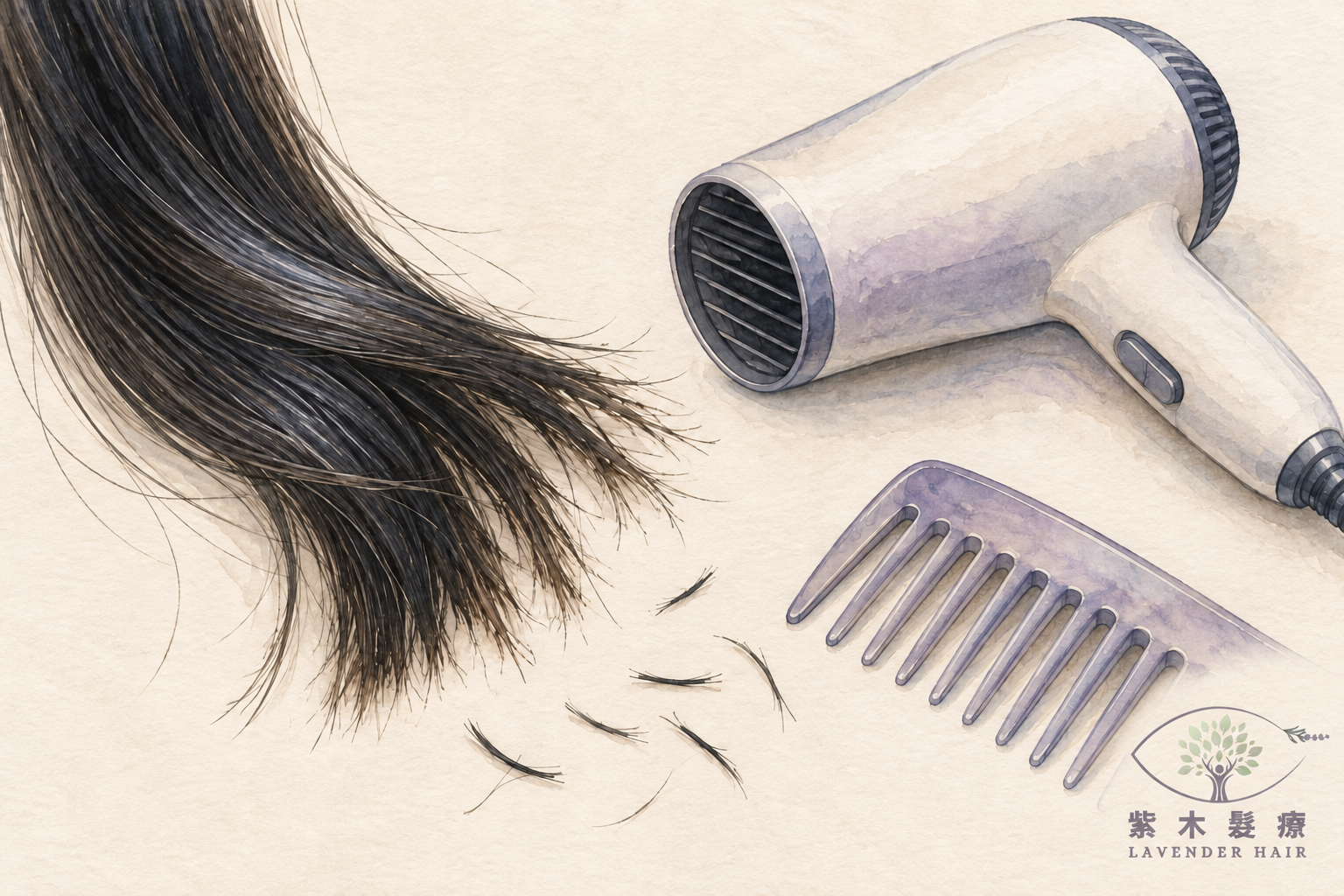 Hair and Everyday Care
Short strands of different lengths may be due to breakage, but a quick glance cannot establish this. Record colouring, perming, heat, brushing and tension habits, and also notice whether the part or hairline looks thinner.
Understand the Concern & Your Next Step ↗ Hair Density & Shedding
Significant weight loss is one physical stressor that may be associated with telogen effluvium, and shedding may start later. Timing alone cannot establish the cause: diet, medicines, health and the pattern of thinning also matter.
Understand the Concern & Your Next Step ↗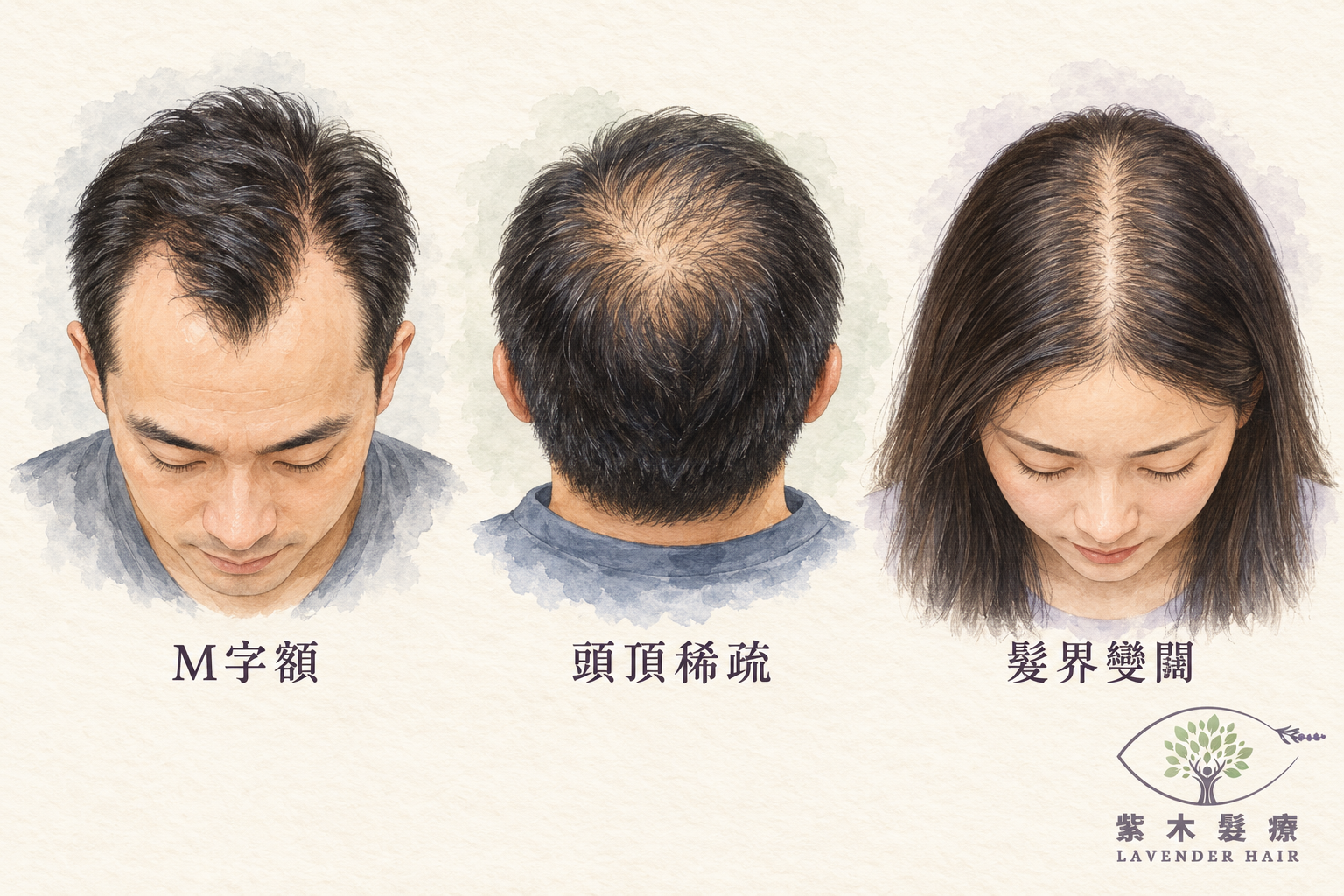 Hair Density & Shedding
A receding hairline, thinning crown and widening part are different visible patterns. Record changes with similar lighting and angles, then explore possible causes, everyday care and available options.
Understand the Concern & Your Next Step ↗Using advanced equipment at 50 to 200 times magnification, we examine the visible condition of your hair, scalp surface and follicular openings, then discuss suitable products or treatments with you.If your needs fall outside our care, we will explain honestly rather than recommend an unsuitable treatment.
Start with the essentials, then explore what they mean for your circumstances.
Seeing hair during a wash is not enough to reach that conclusion. Recording the interval between washes and overall density trends is more useful than one look at the drain.
Understand the cause and your scalp's needs first. Shampoo mainly provides cleansing and everyday care; it cannot guarantee a solution to sudden or ongoing hair loss.